

About Walter Sisulu
Get in touch
Email Address:
Contact Numbers:
Mthatha: 047 502 2100
Butterworth: 047 401 6000
East London: 043 702 9200
Potsdam: 043 708 5200
Chiselhurst: 043 709 4000
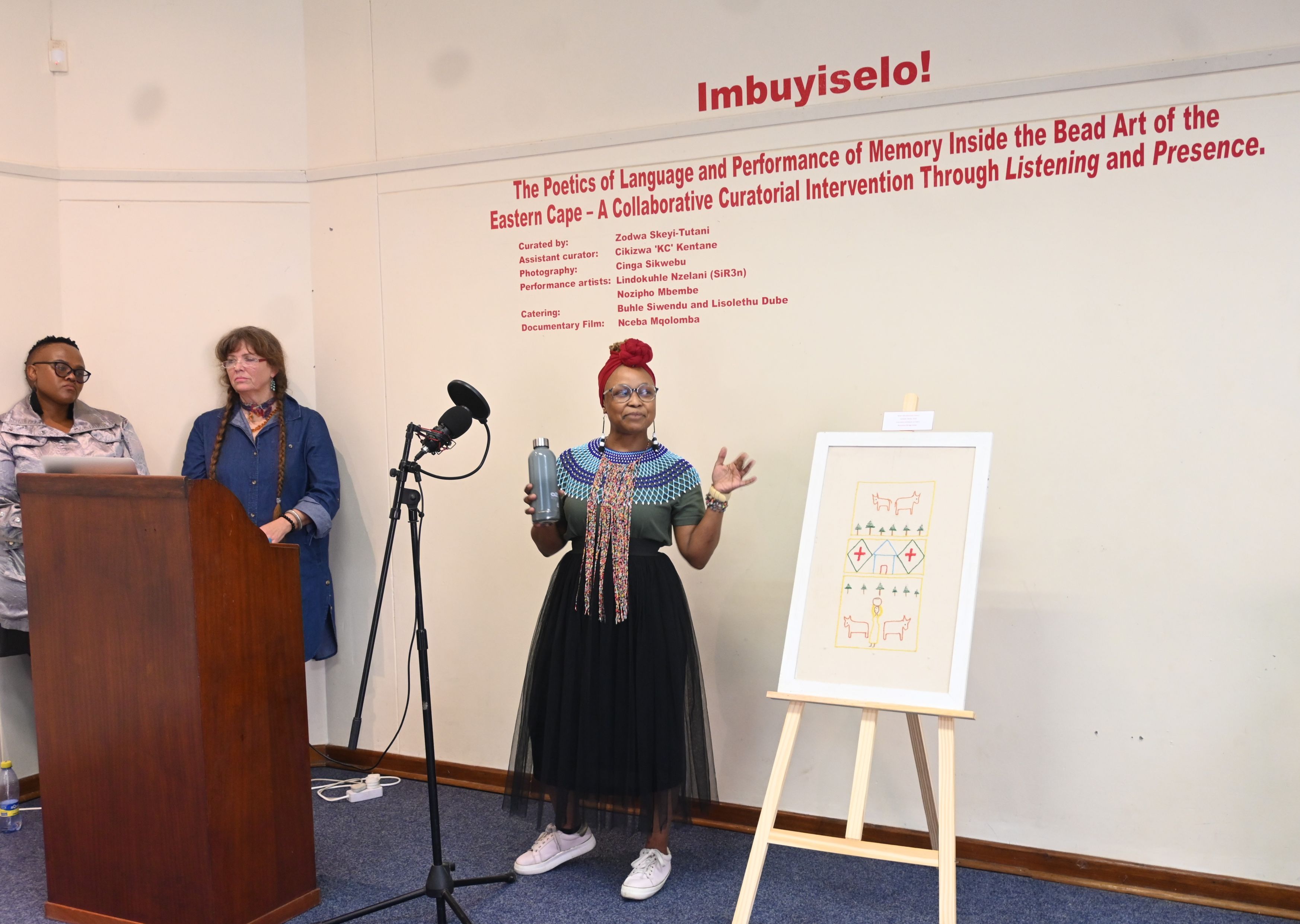 In an effort to preserve traditional legacies and provide a platform for the elderly to share their stories, 41-year-old WSU Fine Art B-Tech graduate, Zodwa Tutani, recently curated an exhibition titled "Imbuyiselo" at the East London Museum.
The exhibition showcased elderly beadwork by the elderly from Nomzamo old age centre in King Williams Town alongside documentaries highlighting their cultural significance, and stories.
Tutani and her team embarked on this journey in 2018, drawing inspiration from her grandmother who, upon retiring, joined a group of elderly women engaged in beadwork to pass time.
Recognizing that beadwork was more than just a craft, but also a means of storytelling and passing on educational information, Tutani felt compelled to amplify the voices of the elderly.
"I worked on the exhibition and included the documentary because I wanted to give the elderly an opportunity to voice their stories as they have a lot to offer," Tutani said.
She said the exhibition represented an opportunity to bridge generational gaps and create lasting memories.
Furthermore, the importance of providing the younger generation with opportunities to learn from their elders in a society where busy lifestyles often limit intergenerational interactions.
"I wanted to create a memory that would last forever. Yes, the beadwork would always be available at the museum, but I wanted to go beyond, and tell a story through these elderly women’s significant work,” she added.
Collaborating with young artists, Tutani underscored the significance of passing down beadwork traditions from one generation to the next, highlighting that mastery of the craft could be achieved through learning from elders at home.
Nceba Mqolomba, a renowned figure in the film industry and director of the award-winning Eastern Cape Film Festival, produced the documentary for the exhibition. Recognizing the importance of capturing and documenting such cultural endeavors, Mqolomba stressed that visual records would endure for future generations, ensuring the preservation of black cultural heritage.
"It is important to capture and document such kind, because people move on, but the visuals will forever be there for the next generations to come for reference," Mqolomba affirmed.
Among the attendees was Zingiwe Singeni, an elderly bead worker who began her craft in the 1970s under the guidance of her late mother.
Singeni lauded the exhibition as a valuable educational experience, emphasizing that it not only taught beadwork but, also transmitted essential traditions and cultural knowledge.
"This is very important because in the sessions of beading, it is not only the teaching of beading being passed, but also the significant traditions and information that needs to be passed from generation to generation," Singeni said.
The exhibition not only celebrated the artistry of beadwork, but also served as a testament to the resilience of cultural traditions and the value of intergenerational knowledge exchange.
Through initiatives like Tutani's exhibition, the rich tapestry of African heritage continues to be woven, ensuring its preservation for generations to come.
By Yolanda Palezweni
Walter Sisulu University
Every gift moves us forward.

The Walter Sisulu Legacy Fund is an opportunity for alumni, staff, partners and friends of the University to invest in the long-term future of Walter Sisulu.
It exists to expand opportunity for students, support academic excellence and innovation, respond to strategic priorities, and build a more resilient institution.
Why give? Because the strength of a university is built across generations. Your contribution helps Walter Sisulu to:
Join the movement. Watch the Fund grow. Add your name to the legacy.