 Languages:
 My WSU | Student Life | Enterprises | Media | Support Services | Vision 2030 | Procurement | Tenders | Contact

ZIPHO XEGO UNPACKS THE INVISIBLE BURDENS OF RURAL WOMEN IN HUNGER-STRICKEN CWEBE
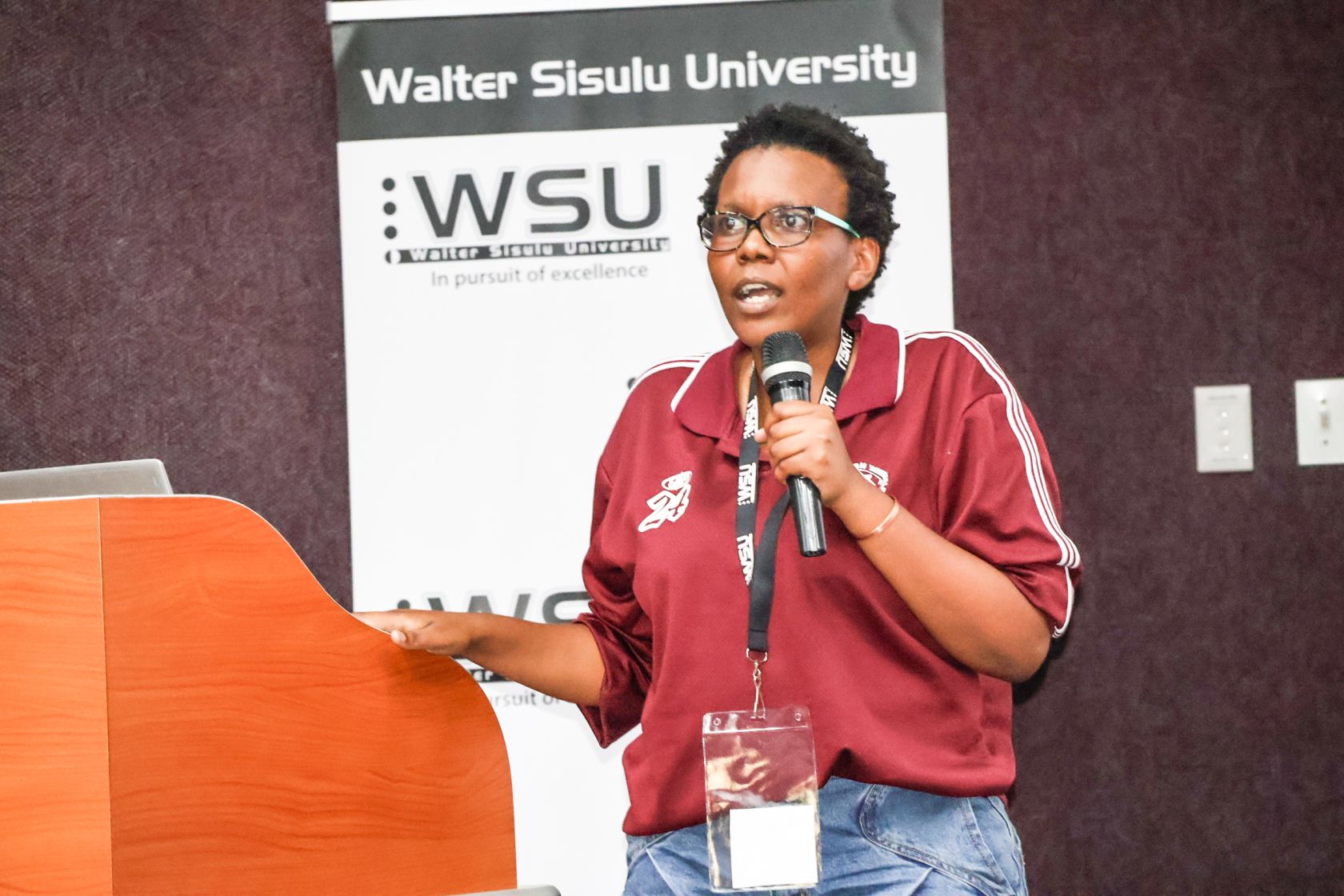
A new study on hunger presented at Walter Sisulu University’s Institutional Research Day has revealed disturbing details of how women of a close-knit rural community use their SA Social Security Agency grant cards as collateral to get food on credit from foreign-owned Spaza shops.
The details were presented by WSU Sociology researcher Zipho Xego, following her 18-month probe on the hidden labour and escalating hardships faced by women in Cwebe, a remote rural community on the Wild Coast of the Eastern Cape.
With use of immersive ethnographic methods, Xego’s research reveals how structural gender inequalities, worsening hunger, and predatory debt cycles are reshaping the lives of rural women often with devastating consequences.
At the centre of the study is the daily struggle for provisioning, a responsibility overwhelmingly carried by women.
“Despite men holding formal authority and land rights in this deeply patriarchal region, women bear the expectation of ensuring that households have food. This burden extends far beyond traditional domestic responsibilities and demands relentless creativity, sacrifice, and resilience,” said Xego.
She added that as the study shows, rural women perform hidden labour of provisioning, everything from managing homestead gardens to devising strategies to secure food when resources disappear.
The research highlights how COVID-19 magnified existing inequalities.
During lockdowns, wage income collapsed, social networks broke down, and support systems evaporated yet the expectation that women must provide remained unchanged. Many resorted to painful coping strategies.
“One mother described how she kept a pot of water boiling at night so her children would believe food was coming, allowing them to sleep despite hunger. This performance of hope, the study found, was common and carried immense shame, despair, and emotional strain,” added Xego.
She said with borrowing networks strained and stokvels disrupted, women increasingly relied on local shopkeepers, many of them non-South African who offered food on credit in exchange for SASSA cards.
“This arrangement created a cycle of involuntary debt, trapping women in long-term dependency. Some have not seen their SASSA cards since the early months of the pandemic. The study reveals that women often protect their grant income from men in the household; one participant hid her money in a sugar tin, knowing it would not be discovered because men do not look there,” said Xego.
She said grants, described locally as imali ekhethekileyo “special money”, are a lifeline but one increasingly eroded by debt and survival pressures.
The research also documents the emotional and psychological toll of persistent hunger. Social workers interviewed in the study reported an increase in mothers asking for their children to be taken into state care because they could no longer provide for them. Some cases escalated into tragedy.
“In 2023, the Eastern Cape government prompted by the South African Human Rights Commission formally declared hunger a state of disaster. When I read statistics about how many people go to bed hungry, I can put faces to those numbers,” she noted.
Xego said the study ultimately reveals a sobering truth that in Cwebe, hunger is not only a matter of food insecurity but an entrenched gendered crisis, one that forces women into cycles of resilience, resourcefulness, and invisible suffering.
She concluded that it calls for urgent policy attention and a rethinking of how support systems can address not only hunger itself, but the unequal burdens placed on women who must tie the belt to keep their families alive.
By Anita Roji
Contact Us
Email Address:
Contact Numbers:
Mthatha: 047 502 2100
Butterworth: 047 401 6000
East London: 043 702 9200
Potsdam: 043 708 5200
Chiselhurst: 043 709 4000
Follow us on Social Media
 |
 |
 |
 |
 |
 |
