
Languages:
Staff Apps | Enterprises | Media | Support Services | Vision 2030 | Procurement | Tenders | Contact
Staff Apps | Enterprises | Media | Support Services | Vision 2030 | Procurement | Tenders | Contact
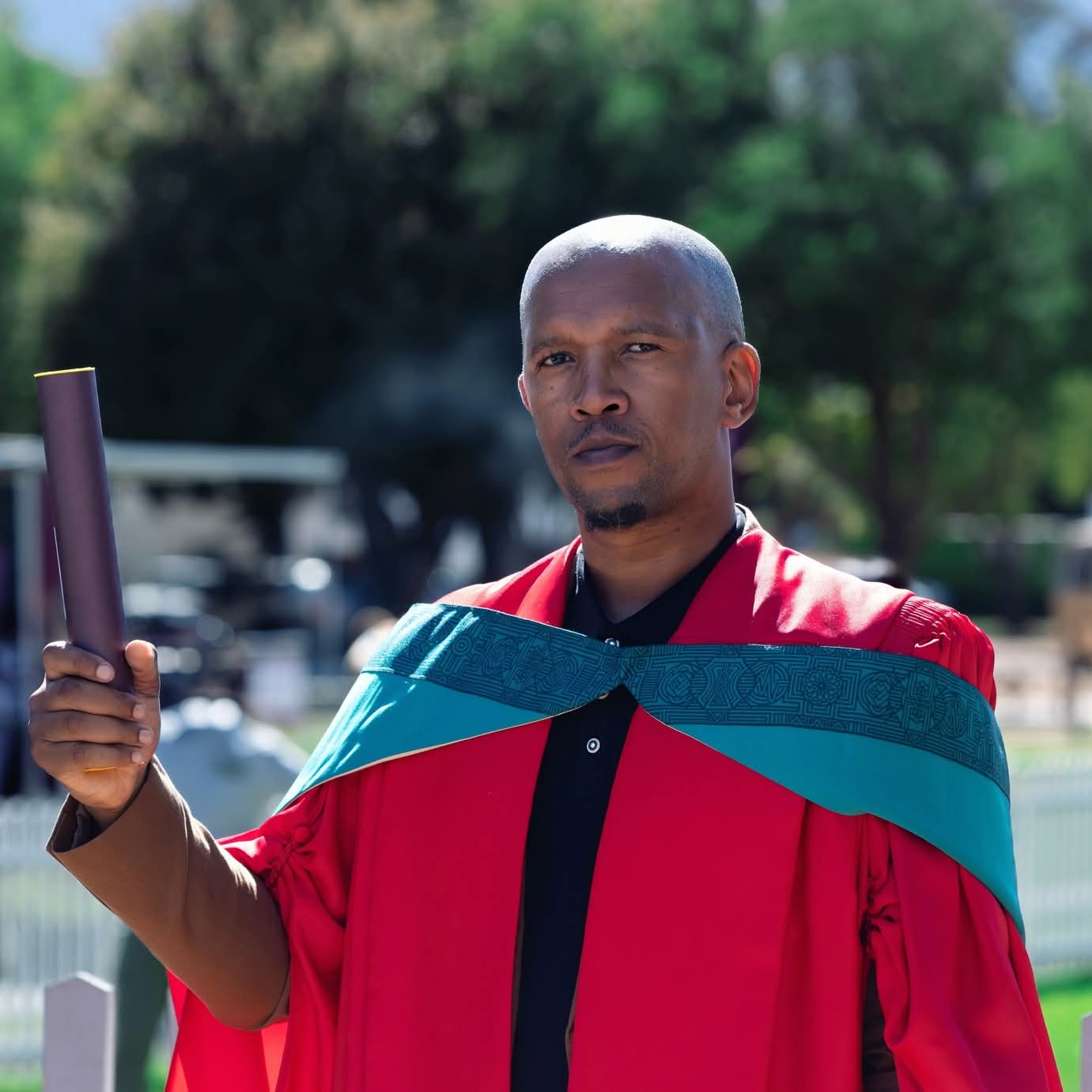 A Walter Sisulu Head of Department for Rehabilitation Medicine, Dr Luphiwo Mduzana, has made history as South Africa’s first African to obtain a PhD in Medical Orthotics and Prosthetics.
His achievement stands as a breakthrough that strengthens representation and research capacity in a profession widely recognised as a scarce skill in the country.
His study focused on the development of clinical guidelines for lower-limb prosthetic prescription, addressing a significant gap within South Africa’s healthcare system where no standardised national guideline currently exists.
“Currently, South Africa does not have a standardised national guideline that practitioners can rely on when prescribing lower limb prostheses. As a result, clinicians often depend on guidelines developed in other countries, which may not always reflect the realities of our healthcare systems or patient populations,” said Mduzana.
He also believes the framework could benefit countries in the Southern African Development Community (SADC) region that face similar healthcare challenges and may wish to adapt the guidelines to their own contexts.
“It is important for us to start designing care and assistive devices that are grounded in local cultures, and lived realities, rather than relying solely on imported models. The field can advance this approach by developing locally designed and manufactured components, improving affordability and sustainability. It also requires decentralising services to reach rural communities and strengthening research that reflects African needs and perspectives. In this way, O&P can help build a more inclusive and context driven healthcare system,” he said.
Mduzana initially aspired to become an engineer, his mother, however, encouraged him to pursue a career in medicine. He would later discover that the field of medical orthotics and prosthetics offered a balance between engineering principles and patient-centred healthcare.
“During my third year of study in Tanzania, one of my lecturers explained that the beauty of prosthetics and orthotics lies in the ability to restore mobility. A patient may arrive in a wheelchair, but after receiving a prosthetic device, they leave walking again. Witnessing someone regain their independence whether returning to school, work, or sport is incredibly fulfilling. That moment is priceless and remains one of the greatest rewards of this profession,” said Mduzana.
Mduzana hopes his achievement will inspire more young professionals to pursue postgraduate studies and contribute to the development of specialised healthcare professions that remain in short supply in South Africa.
“This PhD carries a responsibility to grow the next generation of specialists in the field. It is about opening doors for more young professionals, particularly those coming from communities like ours in the Eastern Cape. Our people deserve rehabilitation services that restore dignity and independence.,” he said.
He said through institutions like Walter Sisulu, it is important to continue developing students who strengthen research in orthotics and prosthetics, and design assistive devices that respond to the real needs of the communities.
By Anita Roji