
Languages:
Staff Apps | Enterprises | Media | Support Services | Vision 2030 | Procurement | Tenders | Contact
Staff Apps | Enterprises | Media | Support Services | Vision 2030 | Procurement | Tenders | Contact
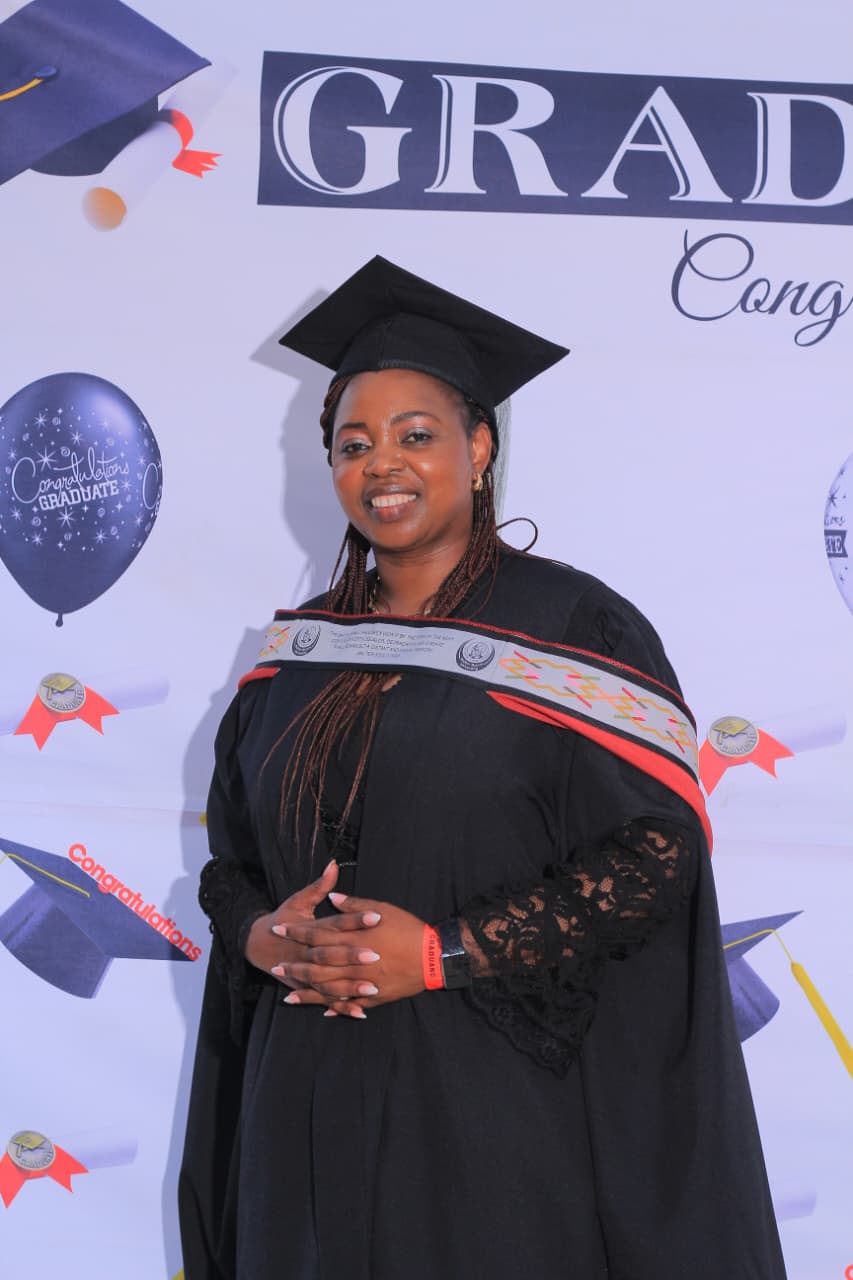
Once again, history has been made at Walter Sisulu’s Faculty of Medicine and Health Sciences, with Dr Phatiswa Sifuba-Makapela becoming the first candidate to obtain her Master of Medicine (MMed) in Chemical Pathology.
This milestone achievement not only marks her as a trailblazer within the faculty, but also establishes her as the first home-trained chemical pathology specialist in the Eastern Cape.
The collaborative partnership between the National Health Laboratory Service (NHLS), Nelson Mandela Academic Laboratory (NMAL) and the University, provided a robust training environment that enabled Sifuba-Makapela to reach this historic milestone.
“It is a deeply humbling and emotional achievement. It represents years of sacrifice, prayer, hard work, and perseverance. It is not only a personal milestone, but also a meaningful moment for the Faculty, NMAL, WS, and the Eastern Cape. Being the first means the door has been opened, and I hope it encourages others to believe that specialist training in Chemical Pathology is possible within our region,” she reflected.
Her interest in chemical pathology started during medical school when she was fascinated by laboratory results and how they helped explain what happens in the body and guide patient care. Often behind the scenes, she said she realised that pathologists played a very important role. From then, she knew she wanted to be part of laboratory medicine and contribute to diagnosis, monitoring, and improving patient outcomes.
Meanwhile, as the first candidate in this growing programme, Sifuba-Makapela admitted that it came with challenges.
“Because the programme was still growing, it lacked the structures of a long-established training platform. After two years in the registrar post, I had to relocate to Pretoria to continue my training in a more established programme. That transition was not easy, as I had to adjust quickly and catch up in many areas.”
However, she navigated these challenges through hard work, faith, support from family, and guidance from mentors and colleagues who believed in her.
Sifuba-Makapela said her dissertation focused on evaluating the quality control performance of a clinical chemistry laboratory using Six Sigma metrics.
“In simple terms, the study examined how well laboratory tests performed and whether quality control processes were strong enough to ensure accurate and reliable patient results. The potential impact on patient care is significant because clinicians depend on laboratory results to inform diagnosis, treatment, and monitoring.”
She shared that by identifying tests that perform well and those that need closer monitoring, the study could help improve laboratory quality, reduce errors, and support safer patient care.
Looking ahead, Sifuba-Makapela said that she would love to be part of something innovative one-day. Innovation that would be made using data to guide practical laboratory decisions that can directly improve the reliability of patient results.
Furthermore, she believes that chemical pathology is a rewarding and meaningful speciality for anyone who enjoys science, clinical reasoning, and problem-solving.
Her advice students to aspiring chemical pathology specialists is to remain curious, work hard, and never underestimate the importance of laboratory medicine in patient care.
“The journey may be demanding, and at times lonely or difficult, but it is worth it. Find good mentors, ask questions, stay disciplined, and remember that every result in the laboratory represents a patient who depends on accurate, timely care,” she concluded.
By Thandeka Mgqibi