
Languages:
Staff Apps | Enterprises | Media | Support Services | Vision 2030 | Procurement | Tenders | Contact
Staff Apps | Enterprises | Media | Support Services | Vision 2030 | Procurement | Tenders | Contact
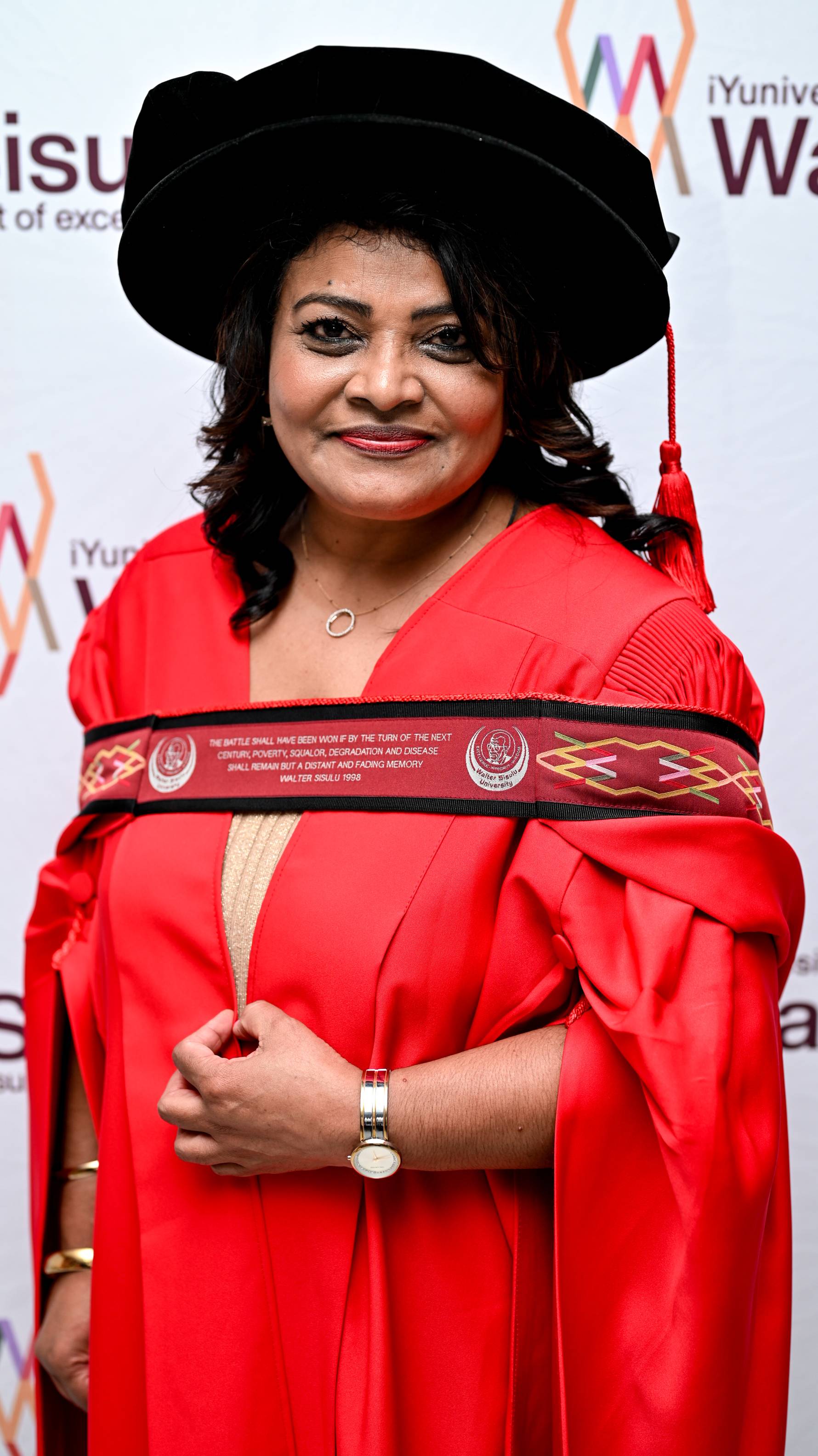 For many, the pursuit of higher education is a lifelong dream. For one dedicated faculty administrator, that dream was delayed but never abandoned. Her journey to earning a PhD is a story of resilience, sacrifice, and unwavering commitment to personal growth.
Faculty administrative officer, Charmaine Pillay, has always been deeply passionate about education and personal development, yet financial constraints earlier in her life meant that further studies were put on hold.
However, her academic journey was reignited only after joining the institution, where she seized the opportunity to pursue higher learning. At the age of 40, Pillay embarked on her bachelor’s degree, followed by honours and a master’s.
“During my master’s studies, I faced one of the most painful experiences of my life, the loss of my eldest daughter to leukaemia. The grief was overwhelming, and I lacked the strength to continue. However, with encouragement and the thought of how proud she would have been, I persevered. I completed my master’s and pressed forward to my PhD which I completed at age 57,” Pillay expressed.
Since beginning her employment in the Faculty of Medicine and Health Sciences in 2008, Pillay witnessed firsthand the immense demands placed on academics in this field. Unlike many other disciplines, she said health sciences academics juggled multiple roles such as early morning meetings, ward rounds, patient consultations, theatre sessions, teaching, and often private practice after hours.
“Over time, I noticed that many colleagues expressed feelings of being overwhelmed, particularly regarding faculty meetings. Yet, there was little formal research exploring this issue. Recognising this gap, that is how my research topic ‘An Exploration of Occupational Burnout of the Health Profession Academics at Walter Sisulu University in the Eastern Cape’ came about,” she explained.
Pillay added that her research highlighted that while more experienced academics had developed coping mechanisms over time, younger academics were significantly more affected by burnout. Her study revealed that among some groups, particularly young black males, there was a perception or stigma attached that acknowledging burnout was a sign of weakness.
“I hope that this research will encourage the university to prioritise mental health and take burnout more seriously. It is essential to create supportive structures and interventions that proactively address these challenges.”
As challenging as pursuing a PhD while working full-time was, Pillay only looks back with pride and fulfilment. She strongly encourages fellow administrative staff to pursue their academic ambitions, saying they should not let their role define their potential.
Having reached this milestone, Pillay is now reflecting on new opportunities and considering the direction her career might take. She remains open to change and exploring paths that will allow her both professional and personal growth.
By Thandeka Mgqibi