
Languages:
Staff Apps | Enterprises | Media | Support Services | Vision 2030 | Procurement | Tenders | Contact
Staff Apps | Enterprises | Media | Support Services | Vision 2030 | Procurement | Tenders | Contact
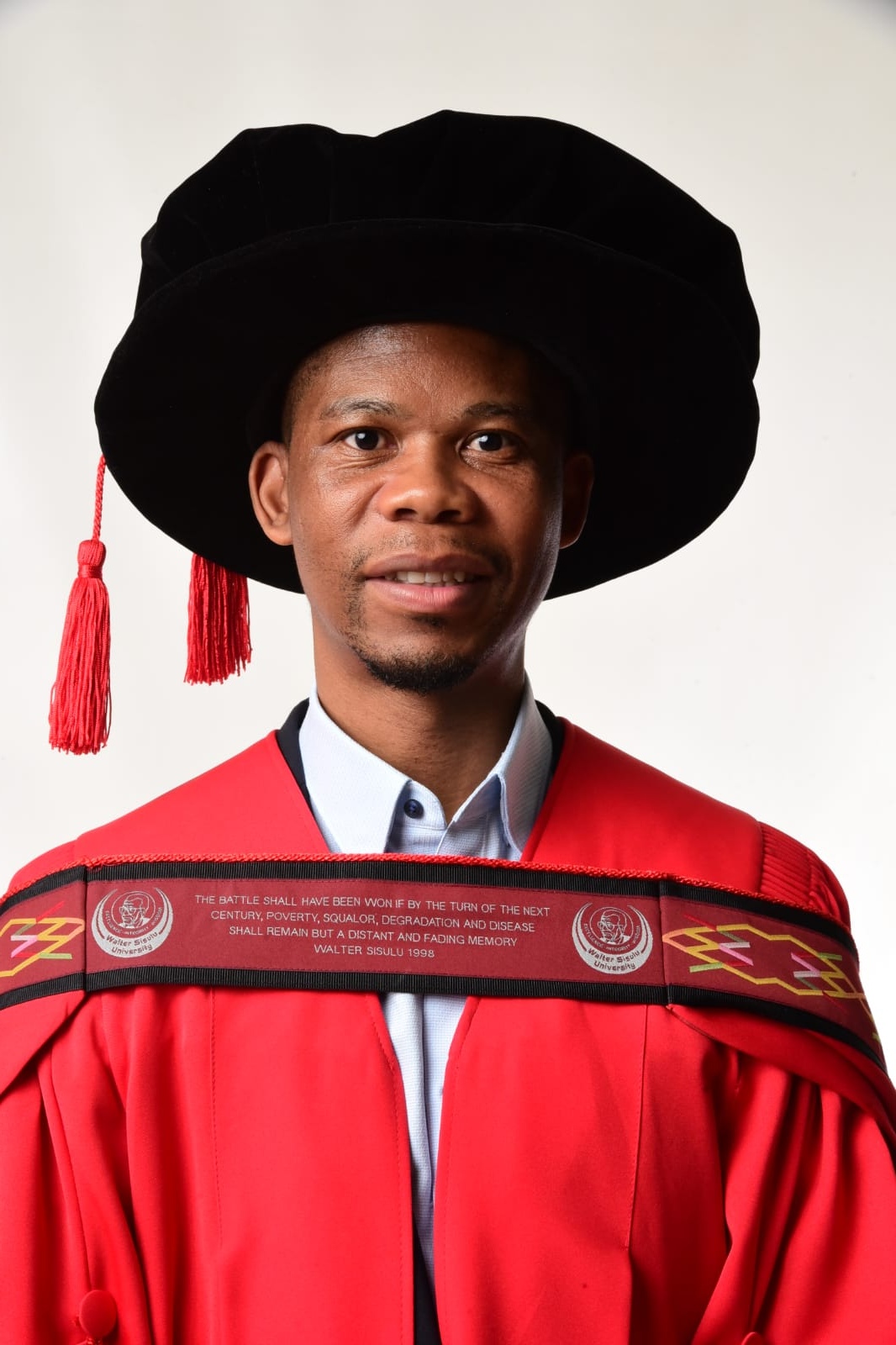 Obstetrician and Gynaecologist, Dr. Xolani Mbongozi, has successfully defended his PhD at the United Kingdom’s University of Stirling, marking a milestone in both his professional and academic journey.
While he had always envisioned pursuing doctoral studies later in life, the opportunity to study in Scotland came sooner than expected. Drawn by both the academic challenge and his love for travel, Mbongozi embraced the path.
Driven by a motivation to make a meaningful difference in disadvantaged communities in the Eastern Cape, and contribute knowledge that can benefit the African child, Mbongozi persevered even when confronted with the demanding realities of doctoral study.
“What kept me going was a shift in purpose. I saw that many senior clinicians with PhDs were nearing retirement, which would leave a significant gap, and there was a need for the next generation to step in. It became my desire to fill that gap,” he reflected.
His doctoral thesis explored whether measuring blood pressure closer to the heart, together with specific heart-related blood tests, could help detect serious complications in women with pregnancy-related high blood pressure earlier than the standard arm measurement.
“I chose this topic because pregnancy-related high blood pressure is a major cause of illness and death for both mothers and their babies. There is a need to identify complications earlier so that treatment can begin before patients become critically ill. My study aimed to address this gap.”
He said the findings showed that using these additional measurements could indeed help detect complications sooner, enabling timely treatment before patients become critically ill.
Reflecting on the moment he realised he had successfully completed his thesis defence, Mbongozi described it as one of profound relief and accomplishment, like everything had come together.
Preparation was key, he said. “I focused on understanding my work inside out. I reviewed my thesis thoroughly, anticipated possible questions, and practised explaining my research clearly and confidently to both academic and non-academic audiences. I also sought feedback from mentors and colleagues, which helped me refine my presentation and build confidence. I prayed.”
He also credits University of Stirling for playing a significant role in supporting his growth throughout his journey. From experienced and approachable supervisors, to attending workshops and training sessions, he says the University fostered a collaborative environment and a real sense of community among PhD students.
Mbongozi currently heads the Department of Obstetrics and Gynaecology within the Faculty of Medicine and Health Sciences, and the Nelson Mandela Academic Hospital, in Mthatha.
He has published five articles from his doctoral work, adding that his vision is not limited to academic publications, but rooted in practical application that benefits the African child.
“My next ambition is to integrate artificial intelligence into my research, creating predictive tools that empower clinicians in resource-limited settings to detect risks earlier, ultimately improving outcomes for mothers and children across Africa.”
Walter Sisulu is one of four South African Universities that the University of Stirling has partnered with, to enhance academic development and research at the country’s historically disadvantaged universities.
By Thandeka Mgqibi