
Languages:
Staff Apps | Enterprises | Media | Support Services | Vision 2030 | Procurement | Tenders | Contact
Staff Apps | Enterprises | Media | Support Services | Vision 2030 | Procurement | Tenders | Contact
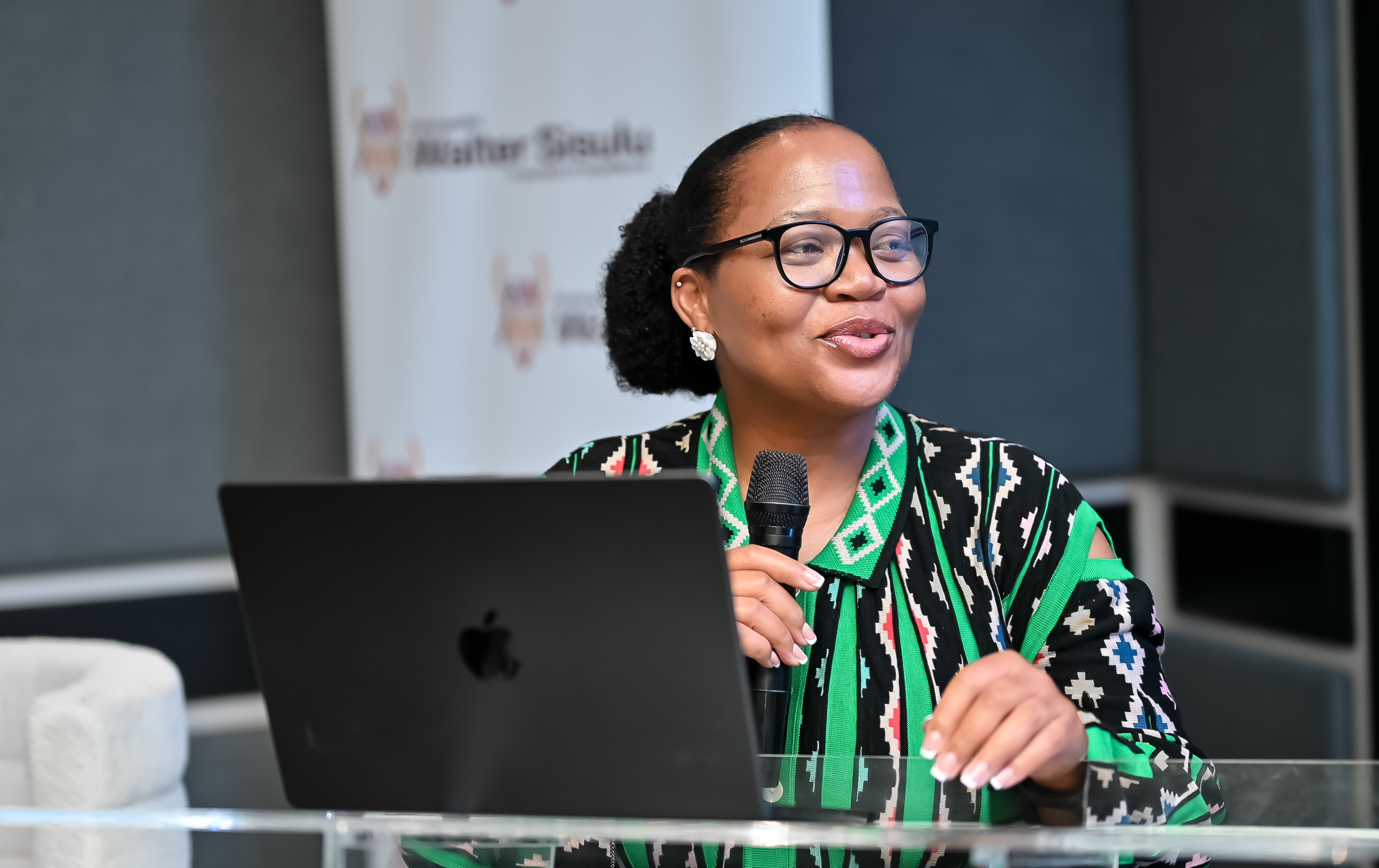
Walter Sisulu Vice-Chancellor and Principal, Dr Thandi Mgwebi, addressed an elite delegation of academics and industry friends regarding the future of higher education institutions in South Africa.
The Vice-Chancellors Transformational Leadership Roundtable was underpinned under the theme; Cultivating Visionary Leadership for Walter Sisulu's next chapter: Navigating complexity, driving transformation.
By convening this high-level group, Dr Thandi Mgwebi tapped into a collective reservoir of "brains and thinking" to navigate the complexities of institutional growth.
“Higher education in Africa is currently at a "moment of change," facing a systemic crisis where the demand for entry threatens to overwhelm the capacity for quality. We received over 500 000 applications for students to come and study. And I'm not sure whether that reflects hunger for education or a reflection of opportunities that are not explicit for our students from society,” said Mgwebi.
She added that this milestone was not merely a number; it is a signal that the government must rethink the education landscape.
"Transformation is not structural, it's cultural, it's intentional, it's relational and also it's deeply human. It is reflected in how leaders make decisions, how teams collaborate, how the institution responds to the aspirations of students,” said Mgwebi.
Mgwebi challenged leadership to balance the "hunger" for learning against the scarcity of alternative pathways for South African youth. She added that this requires a strategy that manages global relevance, engagement in research and responding to local realities and rural socio-economic challenges.
"We exist not only as a university to carry out its traditional missions but to shape leaders who serve society with integrity, courage and purpose. We are not just building innovation hubs; we are providing the skills that make a tangible difference in the communities we serve," she said.
Mgwebi emphasised that the university’s mission is linked to its origins as a beacon for those who were historically denied opportunities and this mission is fuelled by the values of its namesake, Tata Walter Sisulu.
“Our university carries a legacy and that legacy is legacy of access, a deep commitment to social transformation and that is expressed in a number of alumni that you see in the world today that have originated from this university." Mgwebi said.
Walter Sisulu’s geographic distribution across the Eastern Cape is its greatest strategic asset, positioning the institution to act as the primary engine for regional development. The University boasts a student body of 30 000 students and 2500 staff members.
Mgwebi articulated a vision where the university is the "engine" of the town, not just an occupant of it. She explicitly stated that Walter Sisulu’s presence "should be felt in how the town operates.
"The presence of a university in a rural town should be felt in how the town operates. Walter Sisulu exists not only to carry out traditional missions, but to shape leaders who serve society with integrity, courage, and purpose,” she said.
Mgwebi concluded by emphasising the "Africanisation project," noting that the challenge of global engagement versus local alignment is one Walter Sisulu is uniquely equipped to meet.
By Sinawo Hermans