
Languages:
Staff Apps | Enterprises | Media | Support Services | Vision 2030 | Procurement | Tenders | Contact
Staff Apps | Enterprises | Media | Support Services | Vision 2030 | Procurement | Tenders | Contact
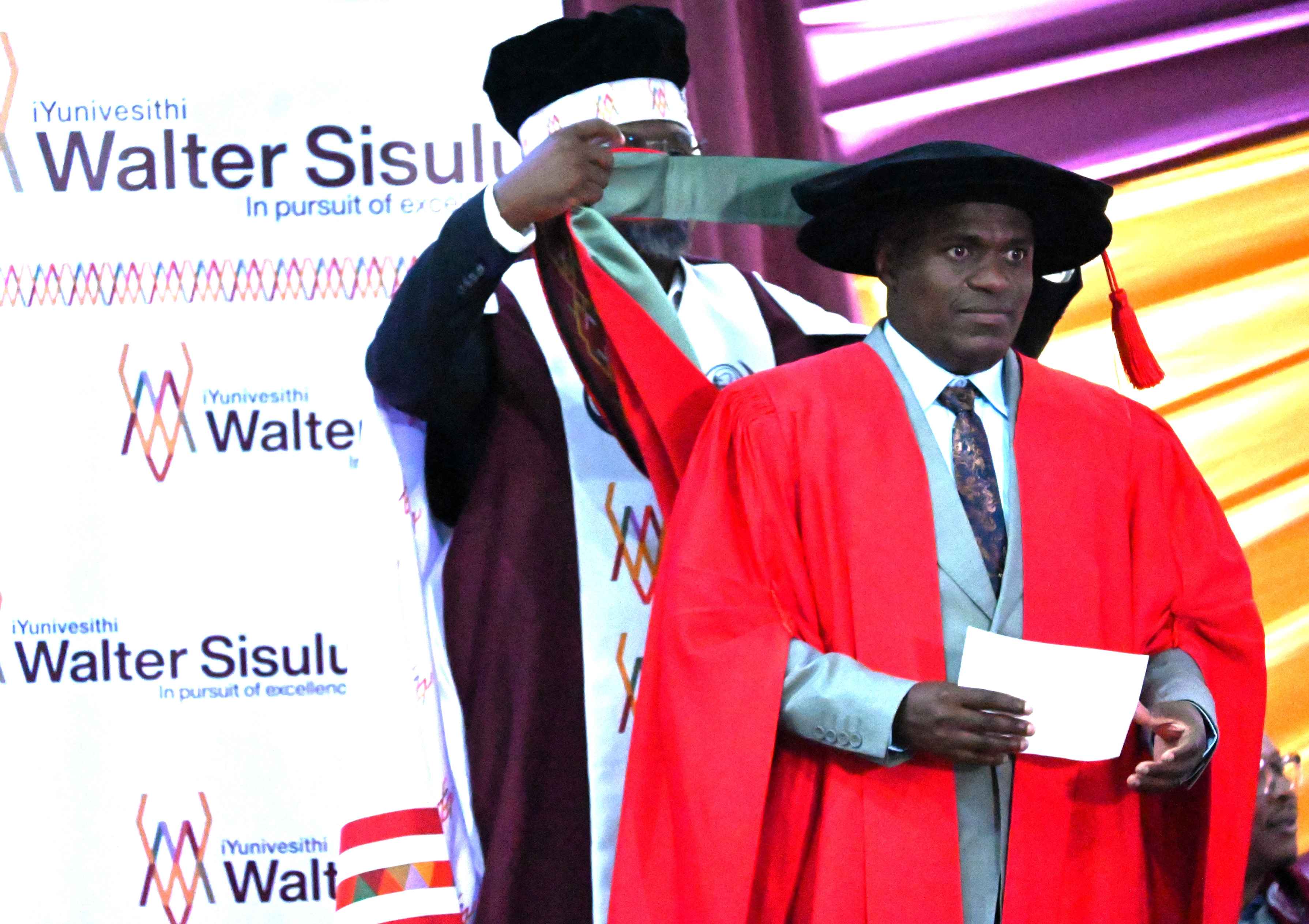
A passion for sustainable food production and community-centred research led Dr Bongile Bhomela of iYunivesithi Walter Sisulu to investigate how one of South Africa’s most recognised indigenous plants could help reshape aquaculture.
Dr Bhomela graduated on Monday at the Mthatha Campus with a Doctor of Philosophy in Health Sciences for his ground-breaking study titled Effect of Rooibos (Aspalathus linearis) Extracts on Growth Performance, Blood Parameters, and Tissue Nutrient Composition of Mozambique Tilapia.
Conducted under a recirculating aquaculture system, the study assessed the effects of fermented and green rooibos extracts on Mozambique tilapia.
The findings revealed that rooibos-supplemented diets improved fish growth performance, feed conversion efficiency, blood health, and nutritional quality, while also reducing fat accumulation.
The study confirmed green rooibos extract as non-toxic and protective against stress-related genetic damage in cultured fish.
For Dr Bhomela, the research was rooted in the urgent need for sustainable and affordable solutions within the aquaculture sector.
“My research was inspired by the growing need for sustainable aquaculture practices, particularly the search for natural alternatives to antibiotics. Rooibos (Aspalathus linearis), a locally abundant plant with known antioxidant properties, presented a promising option to enhance fish health and growth performance,” he said.
He explained that the study was also shaped by the realities faced by local fish farmers, many of whom struggle with increasing feed costs and disease management challenges.
“The study was influenced by challenges faced in local aquaculture, including high feed costs and disease management, which highlighted the need for affordable and sustainable solutions,” he said.
Breaking down the significance of the research, Dr Bhomela said the study investigated whether adding rooibos to the diets of Mozambique tilapia could improve fish health, growth, and nutritional value in a cost-effective and environmentally responsible manner.
“My research looks at whether adding rooibos (Aspalathus linearis) to the diet of Mozambique tilapia (Oreochromis mossambicus) can help them grow better, stay healthier, and improve their nutritional quality,” he said.
“It matters because it explores a natural, affordable alternative to antibiotics and expensive feeds, which can make aquaculture more sustainable, improve fish production, and support food security,” he added.
He expressed hope that the research would contribute towards strengthening aquaculture systems and improving livelihoods in communities that depend on fish farming for economic survival and food access.
“I hope my research will help make fish farming more affordable, sustainable, and healthier by promoting the use of natural plant-based additives like rooibos. This could improve fish production, reduce reliance on antibiotics, and support food security and livelihoods in communities that depend on aquaculture,” he said.
Reflecting on his doctoral journey, Dr Bhomela described the achievement as a testament to perseverance and meaningful impact.
“Earning this PhD represents years of dedication, resilience, and growth for me — it’s not just an academic achievement, but proof that persistence and hard work can lead to meaningful impact. It also reflects my commitment to contributing knowledge that can improve sustainable aquaculture and support communities,” he said.
Encouraging aspiring researchers and students, he shared a message grounded in patience and purpose.
“To others who aspire to follow this path: stay focused, be patient with the process, and believe in your ability to overcome challenges. Your journey may not be easy, but it will be worth it if you remain committed to your purpose,” he concluded.
By: Yolanda Palezweni