
Languages:
Staff Apps | Enterprises | Media | Support Services | Vision 2030 | Procurement | Tenders | Contact
Staff Apps | Enterprises | Media | Support Services | Vision 2030 | Procurement | Tenders | Contact
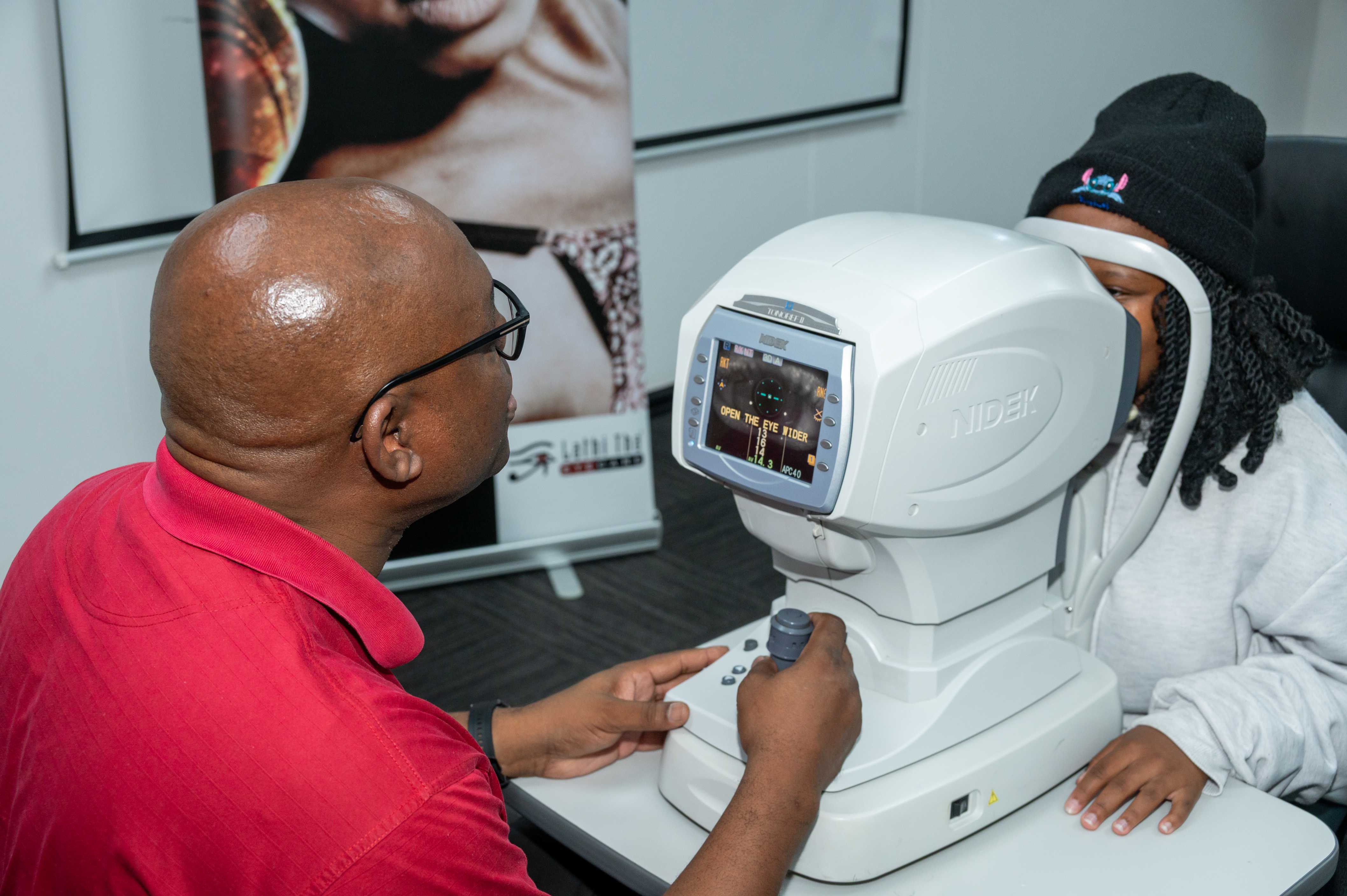
According to preliminary findings by iYunivesithi Walter Sisulu’s Faculty of Medicine and Health Sciences, sixty-five percent of 60 Faculty participants were diagnosed with astigmatism, glaucoma and ophthalmology, during an Eye Care for Academics campaign.
Hosted by the School of Public Health (SoPH), the campaign was inspired by the growing awareness of vision challenges among academics, students, and the broader community.
The campaign was delivered in collaboration with Lathi Tha’ Eyecare, with Mr Sibusiso Thabede leading the optometry team.
Thabede and his team shared interesting preliminary findings from the screenings, with astigmatism identified as the most common condition, affecting approximately 60–65% of the participants. Other notable cases included glaucoma and two severe ophthalmology referrals that required urgent attention.
“Glaucoma is a condition where pressure inside the eye increases uncontrollable due to accumulation of fluid inside the eye. This condition has no pain and the usual symptom beside checking actual pressure with optometrists or ophthalmologist, hardly has any early symptoms. The only time you notice there is a problem is when you lose peripheral vision and by that time, it is usually late and very soon central vision follows,” said Thabede.
He recommended bi-annual eye checks if one does not have systemic diseases like diabetes or high blood pressure, urging the importance of early detection for better management and prognosis.
Prolonged screen time and intensive reading that may lead to eye strain were highlighted as critical yet overlooked dimensions that define academic work.
Representing the Faculty’s School of Public Health, (SoPH), Dr Bomkazi Majeke, said the campaign aimed to promote preventive eye care, raise awareness about common vision problems, and encourage regular eye examinations to support overall wellbeing and academic performance.
“Bringing eye care services closer to people improves accessibility and convenience, encourages early detection of vision problems, and promotes preventive care. It also helps to raise awareness about the importance of eye health, which is often overlooked despite its direct impact on productivity, learning, and overall well-being,” said Majeke.
In her reflections, Majeke noted the importance of ongoing awareness and partnerships in promoting preventive eye care within the university community. She added that the response from staff and students showed that many people were willing to prioritise their eye health when services are brought closer to them.
Meanwhile Thabede reinforced the importance of dispelling common myths.
“The public often believes that optometrists are about issuing spectacles only. And yet, optometrists are the first port of call for eye ailments and only decide afterwards who to better manage one’s condition and the urgency that it deserves,” he concluded.
As an academic institution, iYunivesithi Walter Sisulu supports the academic wellbeing and health of its staff and students, noting that education is not only about intellectual growth, but also about sustaining the physical health of its members.
The Eye Care for Academics campaign demonstrated that academic excellence is inseparable from holistic health.
By Thandeka Mgqibi