
Staff Apps | Enterprises | Media | Support Services | Vision 2030 | Procurement | Tenders | Contact
Staff Apps | Enterprises | Media | Support Services | Vision 2030 | Procurement | Tenders | Contact
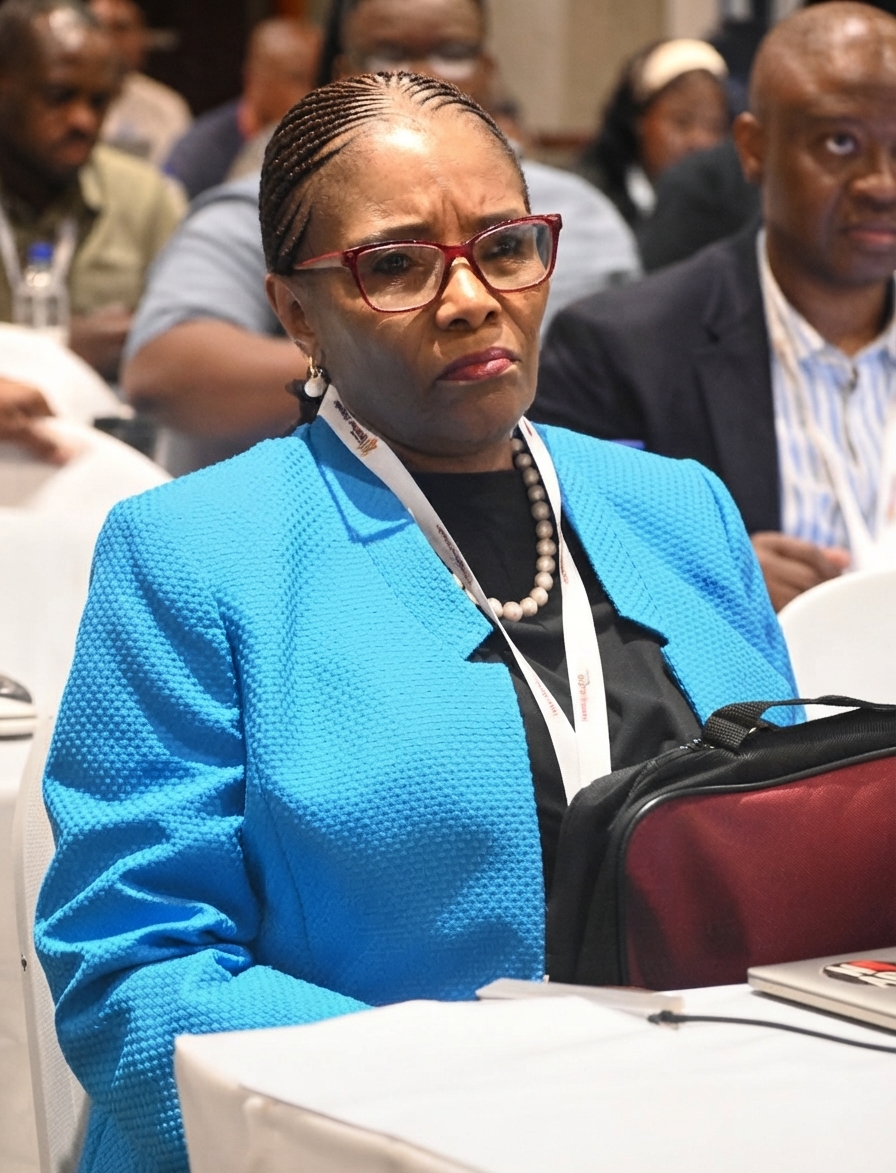 Artificial Intelligence (AI) is reshaping higher education at a pace that demands a fundamental rethink of how universities assure quality, assess students and prepare graduates for an increasingly technology-driven world.
This was the message from Botswana Open University Vice-Chancellor and Principal Professor Kgomotso Moahi, who delivered the keynote address at the Higher Education Quality Assurance Forum (HEQAF) Conference hosted by iYunivesithi Walter Sisulu in KuGompo City.
Speaking under the theme of transforming higher education for quality, equity and student success in the era of disruptive technologies and AI, Prof Moahi challenged universities to move beyond reacting to technological change and instead take a proactive approach to how AI is integrated into teaching, learning, assessment and student support.
“The university does not have the preserve anymore of producing knowledge and transmitting knowledge and being the knowledge keeper, if you like. We don't have that anymore because people can go anywhere,” she said.
Prof Moahi also warned that technological advancement could deepen existing inequalities if issues of infrastructure, affordability and access were not deliberately addressed.
“Our traditional Quality A ssurance practices are inadequate for this dynamic and data-rich nature of the kind of education that we see unfolding because of the technology,” Prof Moahi said.
She called for quality assurance systems to become more responsive to a changing higher education environment, arguing that institutions needed to anticipate emerging challenges rather than rely solely on conventional compliance measures.
“We do need a QA process that is proactive rather than reactive, that is predictive, and that is real-time, beyond compliance,” she said.
In her keynote, under the conference theme” Transforming Higher Education for Quality, Equity, and Student Success in the Era of Disruptive Technologies and Artificial Intelligence” Prof Moahi said the rise of AI had also challenged universities’ traditional position as custodians and transmitters of knowledge.
“But at the end of the day, where are we as human beings? Are we abrogating the responsibility to think and to make decisions to these machines? Surely, we should be there,” Prof Moahi said.
She urged institutions to ensure that graduates were equipped to navigate technological disruption with adaptability, flexibility and critical thinking.
“So, we need to ensure that our students are adaptable, they are critical thinkers, they are flexible, and they recognise that these are, after all, machines,” she said.
“I think it should be higher education and what it seeks to do that should dictate how we deploy the technology,” she added.
By: Yolanda Palezweni