
About Walter Sisulu
Get in touch
Email Address:
Contact Numbers:
Mthatha: 047 502 2100
Butterworth: 047 401 6000
East London: 043 702 9200
Potsdam: 043 708 5200
Chiselhurst: 043 709 4000
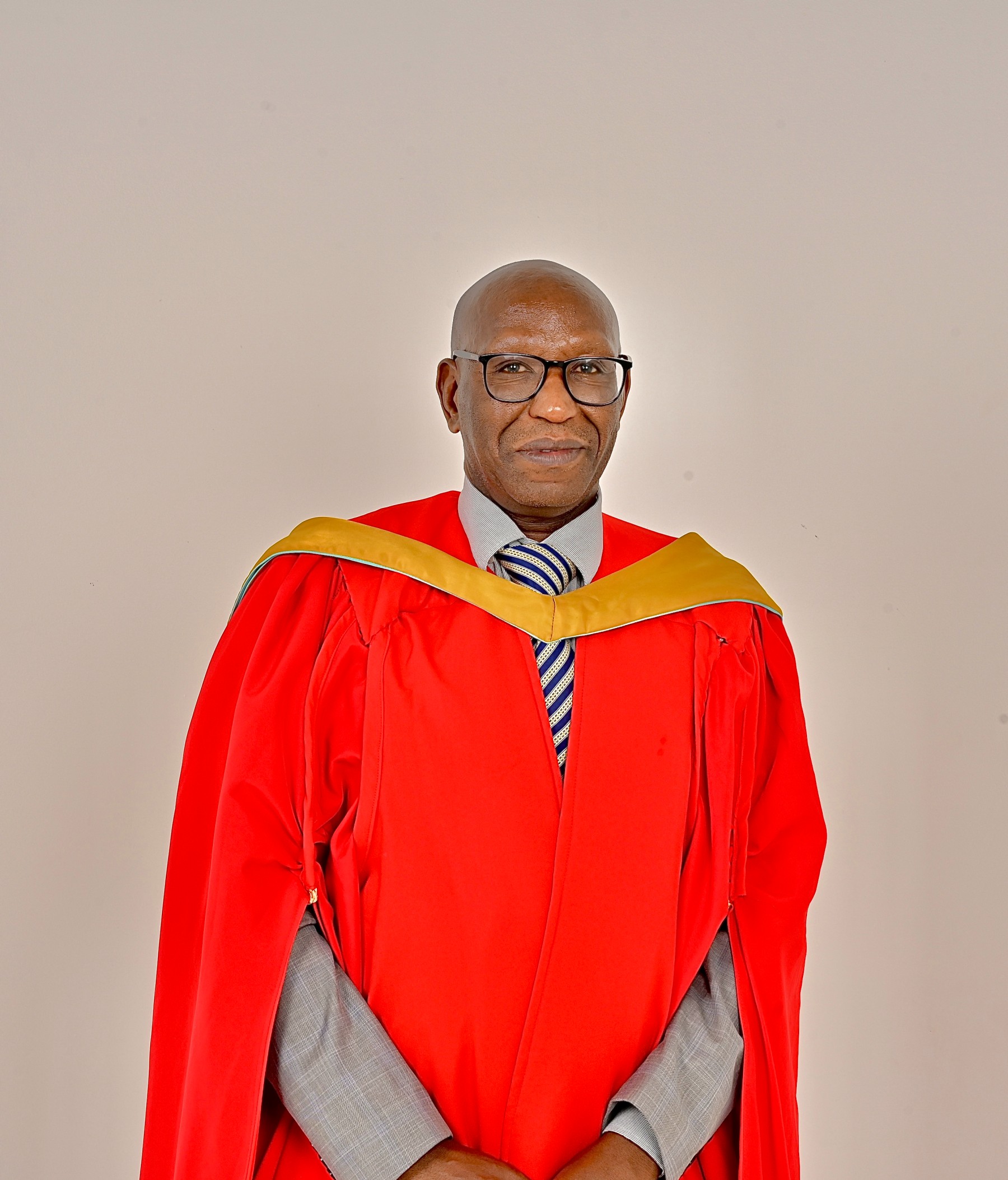
Walter Sisulu University Social Sciences researcher, Professor Simon Murote Kang’ethe recently delivered a captivating inaugural lecture at Mthatha Campus that explored various contradictory aspects within cultural approaches to address issues such as HIV/AIDS and other social challenges in South Africa.
The lecture by the Faculty of Law, Humanities, and Social Sciences professor was titled: “Paradoxes of Cultural Interventions in the Fight Against HIV/AIDS and Other Social Ills in South Africa.”
“Despite billions of investments in antiretroviral programmes, the country faces a variety of hurdles in the fight against HIV/AIDS, such as stigma, gender-based violence, and a failure to meet the Joint United Nations Programme on HIV and AIDS (UNAIDS) targets to treat HIV/AIDS,” said Kang’ethe.
The UNAIDS “90-90-90” target aimed for 90% of those living with HIV to know their status, 90% of diagnosed individuals to receive Antiretroviral Therapy (ART), and 90% of those on ART to achieve viral suppression by 2020.
However, upon reflecting on data from 2017, Kang’ethe said the increase in HIV/AIDS infections and AIDS-related infections and deaths presented both perfidious and pernicious repercussions, especially for a country that spends approximately R280 Billion annually in antiretroviral (ARV) programmes.
“In 2022, with 39 million global HIV/AIDS cases, an estimated 25 million individuals in sub-Saharan Africa were affected, including 8.45 million in South Africa, where the Eastern Cape Province reported the third-highest HIV prevalence rate of 25.2% in 2017, contributing to the country's high mortality in this global health challenge,” he said.
In his 2021 paper on gender nuances and the HIV/AIDS campaign in the Alice region of the Eastern Cape, Kang’ethe attributes gender-based violence to patriarchal power dynamics, resulting in the emasculation of women’s sexual health rights and contributing to the feminization of HIV/AIDS, with higher incidences observed among women than men.
“In many cultures in Africa, there are stereotypes that a real man is not satisfied by one woman and the society has proverbs to justify a man’s engagement with multiple partners and, unfortunately, this encourages male promiscuity, and male dominance, and is a platform for increased vulnerability to HIV/AIDS and gender gender-based violence.”
Kang’ethe highlighted cultural elements influencing the battle against HIV/AIDS and societal challenges, highlighting the significance of traditional male circumcision (TMC), the effective role of traditional healers in treating certain HIV/AIDS-related opportunistic infections, and the embrace of Ubuntu principles.
“Since circumcision has empirically been proven to reduce HIV/AIDS prevalence by 60%, the government needs to stage countrywide campaigns to educate all to accept circumcision as a viable avenue to raise the HIV/AIDS response.”
By Ongezwa Sigodi
Walter Sisulu University
Every gift moves us forward.

The Walter Sisulu Legacy Fund is an opportunity for alumni, staff, partners and friends of the University to invest in the long-term future of Walter Sisulu.
It exists to expand opportunity for students, support academic excellence and innovation, respond to strategic priorities, and build a more resilient institution.
Why give? Because the strength of a university is built across generations. Your contribution helps Walter Sisulu to:
Join the movement. Watch the Fund grow. Add your name to the legacy.