
Staff Apps | Enterprises | Media | Support Services | Vision 2040+ | Procurement | Tenders | Contact
Staff Apps | Enterprises | Media | Support Services | Vision 2040+ | Procurement | Tenders | Contact
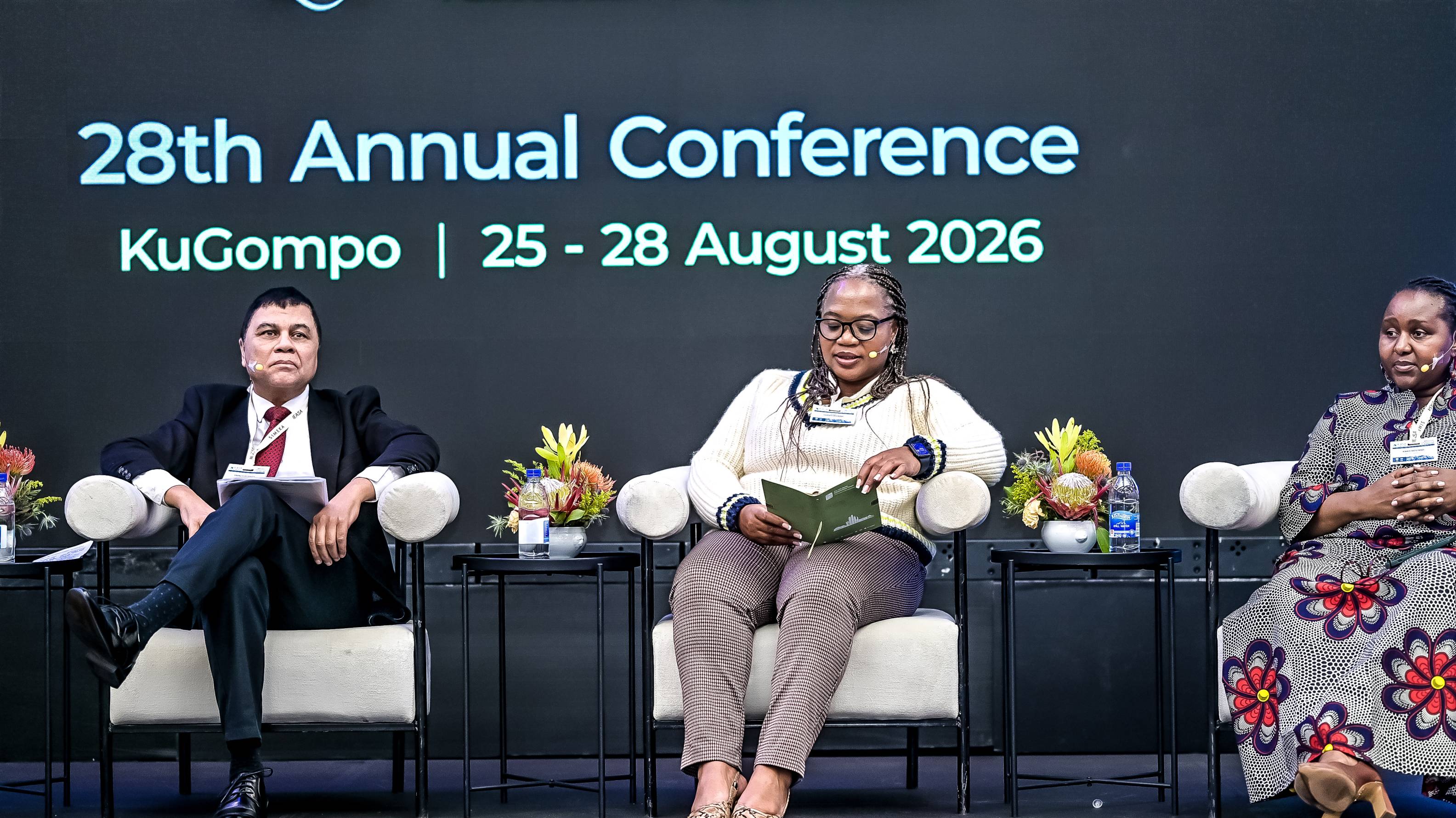
iYunivesithi Walter Sisulu played host to the 28th International Education Association of South Africa (IEASA) conference held in kuGompo, where Vice-Chancellor and Principal Professor Thandi Mgwebi addressed questions of leadership, transformation and student access in higher education.
Mgwebi said universities were operating in an environment shaped by rapid technological disruption, pressure on public funding and growing questions about the value and relevance of higher education.
“The changing environment requires university leaders to move beyond the authority attached to their positions and actively build confidence among students, staff and communities. Leadership cannot rely on institutional authority alone. Authority, yes, may come with the office, but legitimacy does not, and trust does not,” Mgwebi said.
She said institutional trust was earned over time through the experiences of those who interacted with a university. Trust depended on whether an institution’s words were consistent with its actions and whether commitments made by its leaders translated into tangible outcomes.
“The most credible evidence of university leadership trust is not the absence of disagreement or the absence of protest or the absence of criticism,” Mgwebi said.
She said trust was demonstrated when stakeholders believed that decisions were credible, evidence had been presented, their voices had been heard and leaders had acted in the institution’s best interests.
“For students, trust is closely connected to procedural fairness; when they believe that the processes will be fair, even if they don’t favour them,” she added.
She said institutions routinely received large numbers of applications from young people seeking higher education, but the success of an access-driven university should ultimately be measured by student progression and completion.
“Access must be increasingly understood as access for success,” she said. “In my own university, we call ourselves the University of Access, but is that access for success?”
Her remarks placed students, institutional accountability and public trust at the centre of discussions about transforming and internationalising higher education from a Global South perspective.
The conference was held from 25 to 28 August under the theme: “Rewriting the Agenda: Internationalisation through a Global South Lens,” which brought together higher-education leaders, academics and internationalisation practitioners.
By Asenathi Danayi