
Staff Apps | Enterprises | Media | Support Services | Vision 2030 | Procurement | Tenders | Contact
Staff Apps | Enterprises | Media | Support Services | Vision 2030 | Procurement | Tenders | Contact
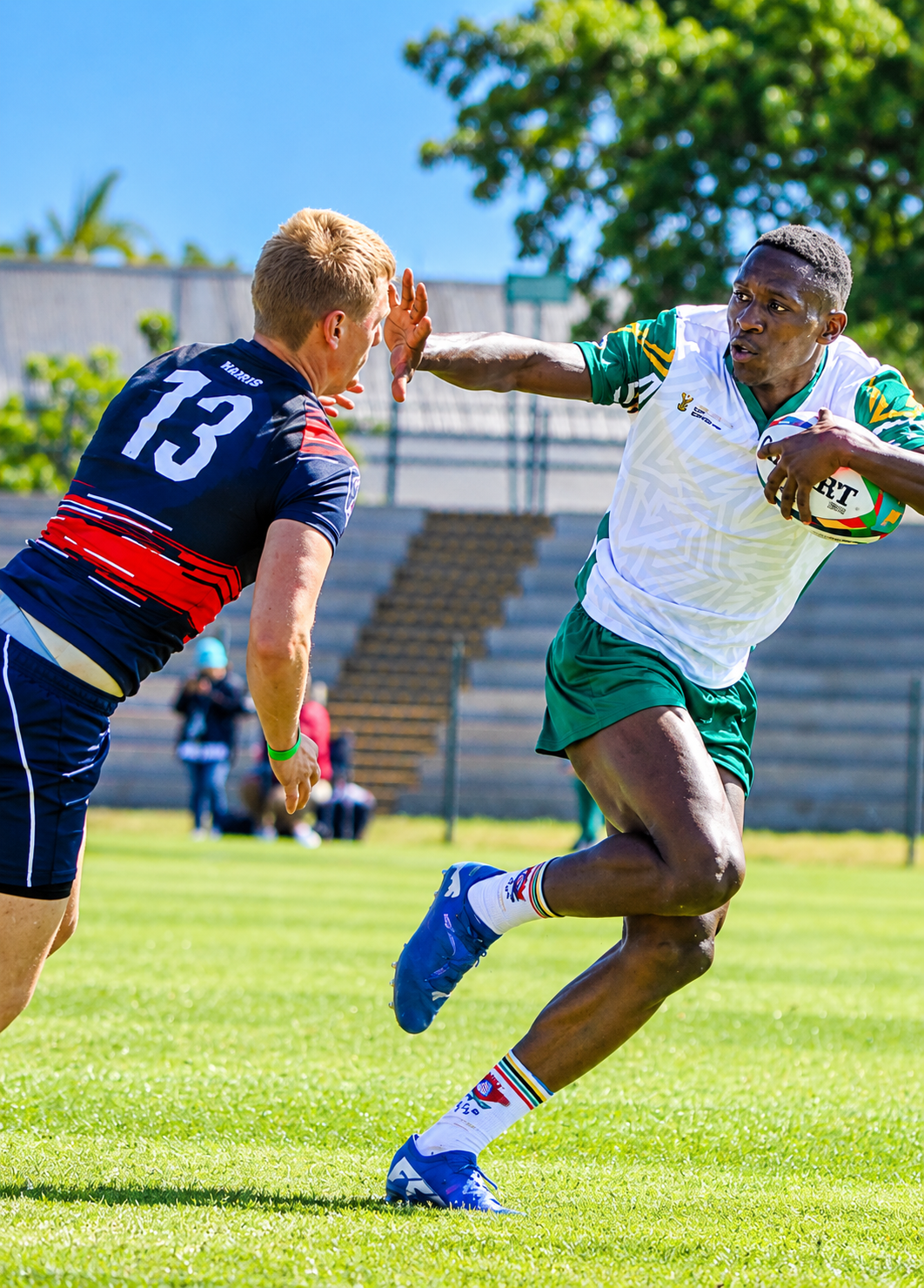
Trophies, national selections and international recognition have propelled the Walter Sisulu All Blacks squad into one of the most exciting periods in the history of the University’s rugby programme.
The 2025–26 season has been particularly rewarding, with the All Blacks winning the Border Rugby Super League, reaching the FNB Varsity Shield final and producing players who have gone on to represent South Africa on the international university stage.
Captain Lukhangele Tshayi and winger Simthembile Zozi were selected for the South African national university 7s team and played a key role as the country won the FISU World University Rugby 7s Championship in Stellenbosch recently.
The accolades have continued to flow.
Tshayi and Zozi, together with eighth-man Sipho Hobosch and former All Blacks player Hlumelo Zitha, have been selected for Club Afrique’s squad for the Christie 7s tournament in Nairobi, Kenya, from 12–13 September.
For head coach Thembani Mkokeli, the All Blacks’ remarkable run represents far more than a collection of trophies, but rather proof that talent nurtured in a rural university environment can compete, and succeed, at the highest levels.
“As a coach, I am emotional. I am proud. Walter Sisulu All Blacks winning the Border Rugby Super League is not just a trophy, but it is a statement. It says a small university from a rural setting can produce champions,” he said.
Mkokeli attributes much of the team’s success to a game plan built around the strengths of its players rather than attempting to imitate established rugby programmes.
“We did not try to play like other teams. As coaches, we built a game plan for Walter Sisulu players - strong set-piece play, low-risk rugby, territory and defence.”
The strategy proved highly effective, with the All Blacks conceding the fewest points in the Super League.
“Defence wins championships,” said Mkokeli.
Yet, beneath the tactics was a strong sense of unity that the coach believes ultimately made the difference.
“This group stayed together for two years. There were no big egos. No one was fighting for a jersey on social media. They were at training even when there was no stipend. The unity is why we won,” he said.
That commitment extended to the team’s demanding conditioning programme, including its famed 5am training sessions.
“By the second half, you could see that Walter Sisulu was still running while other teams were dropping. That comes from those 5am sessions,” Mkokeli said.
He also credited the wider University community for rallying behind the team.
“When a team feels supported, they play for more than themselves. Walter Sisulu did not win because we had the best individual players. We won because we were the best team.”
For Mkokeli, however, the greatest reward lies in seeing young players develop into accomplished athletes capable of competing on the biggest stages.
“The FISU selection showed that our players are not just good enough for the All Blacks, but are good enough for the world. Their calibre is international. That, for me, is my ultimate legacy,” he concluded.
By Thando Cezula