

About Walter Sisulu
Get in touch
Email Address:
Contact Numbers:
Mthatha: 047 502 2100
Butterworth: 047 401 6000
East London: 043 702 9200
Potsdam: 043 708 5200
Chiselhurst: 043 709 4000
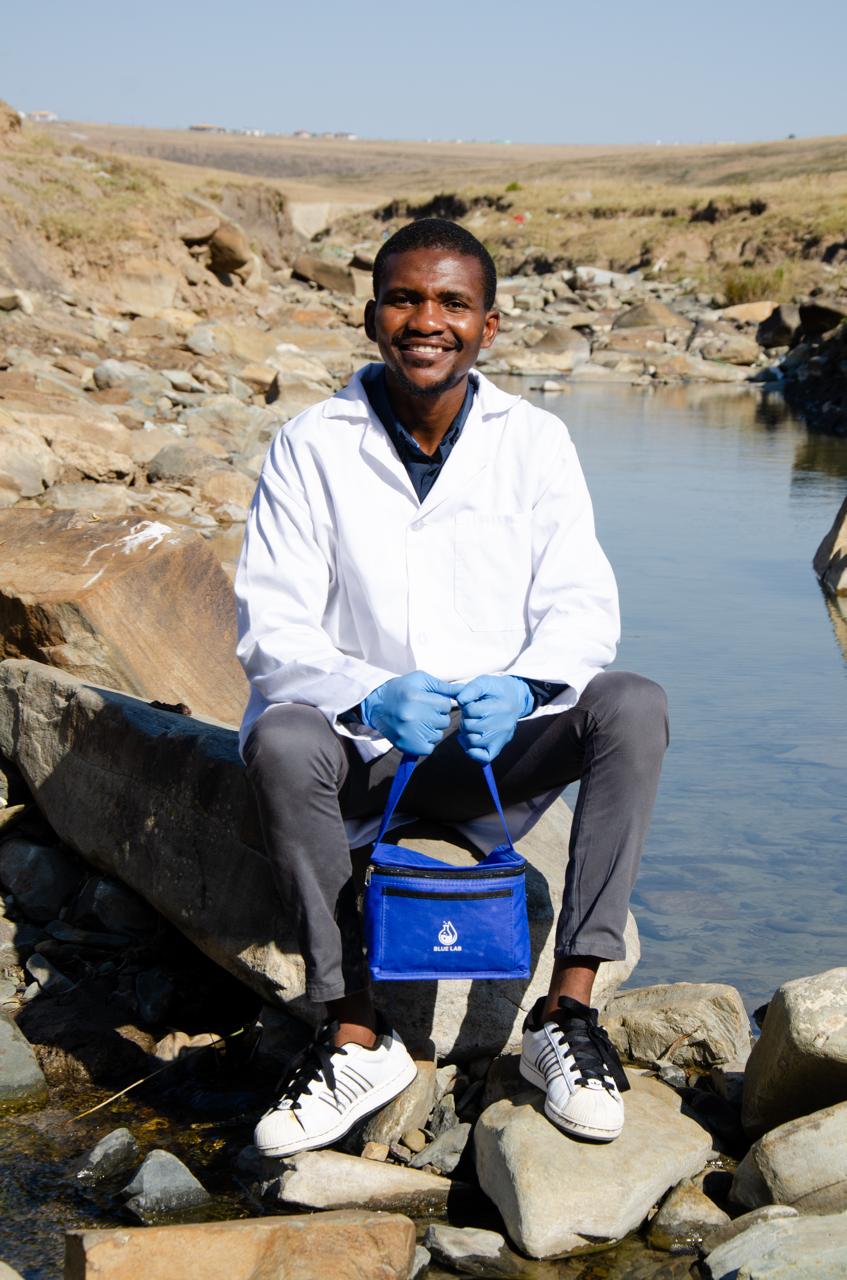 Walter Sisulu Centre for Entrepreneurship Rapid Incubator Innovation Champion and founder of Blue Lab, Sithethelele Bekwa, has secured R300 000 to advance accessible water quality monitoring for underserved communities.
Blue Lab, a portable and easy-to-use water quality monitoring toolkit, was selected among the top 20 finalists, earning Bekwa the opportunity to pitch his innovation at the SAB Foundation Social Innovation and Disability Empowerment Awards.
“This achievement comes at a time when water contamination incidents have stressed the need for communities to access timely and reliable information about the safety of their drinking water,” said Bekwa.
He said that communities should not have to wait for a public health crisis before they can access information about their drinking water.
“We need a system in which water quality monitoring is accessible, transparent and responsive, and where communities have a meaningful role in decisions that affect their health,” said Bekwa.
He added that South Africa’s recent water contamination crisis in Bronkhorstspruit, Tshwane, has again drawn attention to the importance of early-warning systems and effective communication about potential health risks.
Between 7 and 18 October 2026, 408 cases of gastrointestinal illness were reported in Bronkhorstspruit and surrounding communities, with most affected patients reportedly younger than four years old.
“Blue Lab seeks to address the gap in accessible water quality information through a rapid, portable and easy-to-use monitoring toolkit designed to bring preliminary water quality screening closer to people in rural, remote and marginalised communities,” he said.
He said the toolkit aims to assist municipalities, environmental practitioners and trained community users in obtaining timely information about potential contamination, helping them make informed decisions about further testing and protective action.
“Safe water is not simply an infrastructure issue; it is a public health and accountability issue. There is a need to ensure that communities are not left without information that could help protect their health,” said Bekwa.
The development of Blue Lab has received support from the Walter Sisulu Office of Technology Transfer through its technology validation processes, while manufacturing activities have been undertaken at the Walter Sisulu National Pollution Laboratory.
“The R300 000 support package will fund the next phase of development and pilot testing. Planned activities include refining testing components, improving usability for non-specialist users, conducting further validation and field testing, strengthening quality assurance, developing training materials and documenting pilot results,” said Bekwa.
Bekwa is also calling for greater collaboration between government departments, municipalities and water service authorities to improve access to community-level water quality screening.
He believes validated, fit-for-purpose screening tools could be integrated into routine water safety monitoring and public health protection programmes, complementing existing municipal systems and accredited laboratories rather than replacing statutory compliance testing.
The innovation aligns with Sustainable Development Goal 6, which seeks to ensure the availability and sustainable management of water and sanitation for all.
By Anita Roji
Walter Sisulu University
Every gift moves us forward.

The Walter Sisulu Legacy Fund is an opportunity for alumni, staff, partners and friends of the University to invest in the long-term future of Walter Sisulu.
It exists to expand opportunity for students, support academic excellence and innovation, respond to strategic priorities, and build a more resilient institution.
Why give? Because the strength of a university is built across generations. Your contribution helps Walter Sisulu to:
Join the movement. Watch the Fund grow. Add your name to the legacy.