
Staff Apps | Enterprises | Media | Support Services | Vision 2030 | Procurement | Tenders | Contact
Staff Apps | Enterprises | Media | Support Services | Vision 2030 | Procurement | Tenders | Contact
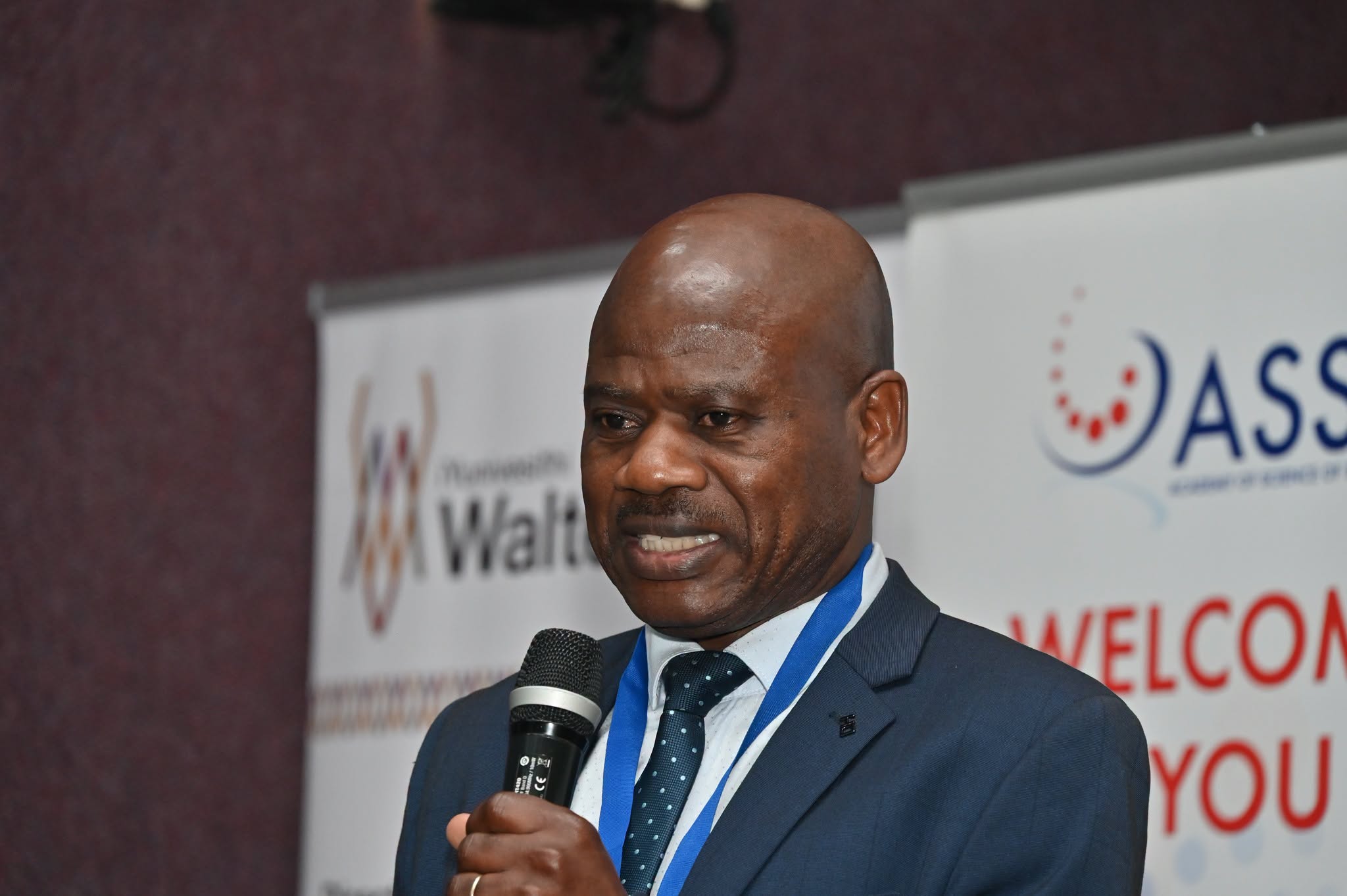 The water-energy-food nexus, indigenous knowledge and rural innovation must be placed at the centre of scientific research if South Africa is to accelerate sustainable development and build resilient communities, according to the Faculty of Natural Sciences Executive Dean, Prof Albert Modi.
The keynote address was delivered at iYunivesithi Walter Sisulu’s Annual Young Scientist Conference (AYSC) in response to the conference theme: “Assuring Sustainable Water Availability and Safe Sanitation Systems to achieve the goals of Agenda 2063.”
Modi challenged young scientists to look beyond traditional disciplinary boundaries and consider how science, innovation and indigenous knowledge can work together to address the country’s most pressing challenges.
At the centre of the address was the water-energy-food nexus, which was presented as an important framework for connecting different areas of research and creating practical solutions for communities.
Modi said water should be considered central to achieving the objectives of the Sustainable Development Goals, the National Development Plan 2030 and Agenda 2063, particularly in areas such as poverty reduction, food security, environmental sustainability, innovation and rural development.
“Every time I think about anything, I always want to connect two or three things, and when I do research, I also try to connect two or three things and that is how interdisciplinary research is achieved,” said Modi.
The address also placed emphasis on Indigenous Knowledge Systems (IKS) and their potential contribution to scientific research. Modi argued that indigenous knowledge is rooted in generations of observation and interaction with nature, including traditional ways of identifying water sources, predicting rainfall and recognising drought indicators.
“Science was there before there was a university, human survival historically depended on observing, analysing and responding to patterns in nature, therefore, researchers need to move beyond simply documenting indigenous knowledge and instead investigate, validate and measure it using scientific methods,” he said.
Modi further highlighted opportunities for combining indigenous knowledge with modern technologies, including artificial intelligence, to address contemporary challenges.
He also called for universities to become living laboratories that actively engage with surrounding communities and use research to address real-world challenges.
“As rural universities we must conduct research that responds to the needs of government and rural communities. We must create opportunities for rural people through research, innovation and commercialisation,” said Modi.
Using indigenous crops such as amadumbe as an example, Modi demonstrated how crops traditionally associated with rural communities can create economic opportunities when supported by research, market development and innovation.
He urged young scientists to consider not only the publication of research but also its practical impact.
Modi concluded with a call for scientists to combine scientific excellence, indigenous wisdom, innovative thinking and community action in pursuit of the aspirations of Agenda 2063.
“Agenda 2063 will not be achieved by technology alone, nor by policy alone. Its success depends on our ability to bring together scientific excellence, indigenous wisdom, innovative thinking, and community action,” he said.
He challenged the young scientists to see themselves not merely as beneficiaries of Africa’s future, but as active contributors to creating it.
He said if researchers harness the power of IKS, strengthen the water-energy-food nexus, and invest in rural universities like Walter Sisulu as engines of innovation, they can cultivate a resilient and sustainable Africa for generations to come.
By Anita Roji