
Staff Apps | Enterprises | Media | Support Services | Vision 2030 | Procurement | Tenders | Contact
Staff Apps | Enterprises | Media | Support Services | Vision 2030 | Procurement | Tenders | Contact
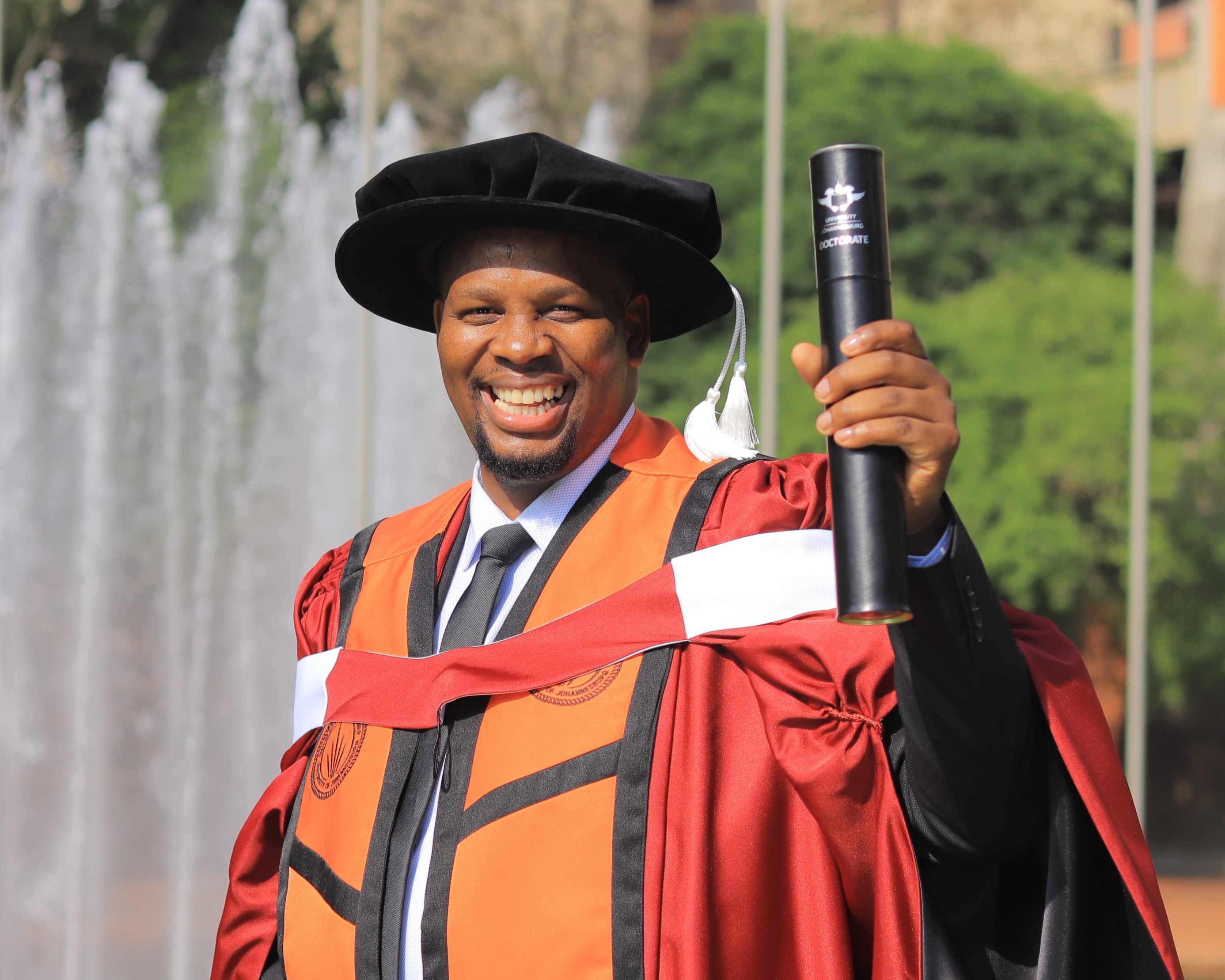
A new framework developed through Dr Siyabulela Dywili’s doctoral studies could help improve how higher education infrastructure projects are planned, funded and delivered in South Africa.
Dywili, Deputy Head of Department for Construction Management and Quantity Surveying in the Faculty of Engineering, Built Environment and Information Technology (FEBEIT) at iYunivesithi Walter Sisulu, recently obtained his PhD in Construction Management from the University of Johannesburg.
His research, titled “A Framework for the Delivery of Higher Education Infrastructure Projects in South Africa,” examines the challenges affecting infrastructure development at higher education institutions and proposes an integrated approach to improve the delivery of these projects.
The framework brings together key factors including leadership, procurement, budgeting, digitalisation, governance and inclusivity, linking them to the successful delivery of infrastructure projects.
“It is in light of the many challenges facing infrastructural development in higher education that my research endeavours to assess the various attributes that influence the development of higher education infrastructure projects, with a view to developing a framework for the country,” Dywili said.
He said the research was informed by the persistent challenges experienced in higher education infrastructure development, including poor planning, delays, cost overruns, weak accountability and limited alignment between infrastructure investment and institutional priorities.
“Given the crucial role of higher education in advancing social equity and national development, the absence of such a framework has contributed to recurring cost overruns, poor planning, weak accountability and inadequate alignment with broader development objectives,” he said.
Dywili’s research also draws from his own experience as a student and academic. A Cum Laude graduate of iYunivesithi Walter Sisulu’s National Diploma in Building through the Extended Curriculum Programme, he experienced first-hand how classrooms, laboratories, academic facilities and other university infrastructure shape the student experience.
“This personal journey also influenced my interest in higher education infrastructure. It made me increasingly aware that infrastructure is not simply about buildings, construction and physical assets, but it also directly affects the quality of student experience, teaching and learning, academic development, research and the ability of an institution to fulfil its mandate,” he said.
Born and raised in Tsolo, Dywili said his early appreciation of education played an important role in his academic journey.
For him, the value of completing the PhD extends beyond the qualification itself, as he hopes the research can contribute to improving the systems through which universities plan and deliver infrastructure.
“The most satisfying thing about the height of my educational journey is knowing that the research has produced something that can potentially contribute beyond academia,” he said.
Dywili said better infrastructure delivery ultimately has a direct effect on the people who use university facilities every day.
“Behind every project, there are people. There are students who need appropriate learning spaces, researchers who need functional labs, lecturers who need suitable teaching environments and university staff who depend on functional facilities to efficiently discharge their duties,” Dywili said.
His framework therefore considers infrastructure as an important part of the broader higher education system, with implications for teaching and learning, research, student experience and institutional development.
“The framework recognises that infrastructure delivery cannot be optimised by focusing on one factor in isolation. Financial, managerial, technological, governance and social considerations need to work together,” he said.
Dywili hopes the framework will contribute to a more coordinated and effective approach to higher education infrastructure delivery, ultimately helping institutions create environments in which students can learn, researchers can innovate and staff can perform their duties effectively.
“By aligning leadership vision, procurement practices, sustainable financing, digital innovations, and inclusive policies with measurable project outcomes, the framework makes both theoretical and applied contributions,” he said.
By Thando Cezula