
Languages:
Staff Apps | Enterprises | Media | Support Services | Vision 2030 | Procurement | Tenders | Contact
Staff Apps | Enterprises | Media | Support Services | Vision 2030 | Procurement | Tenders | Contact
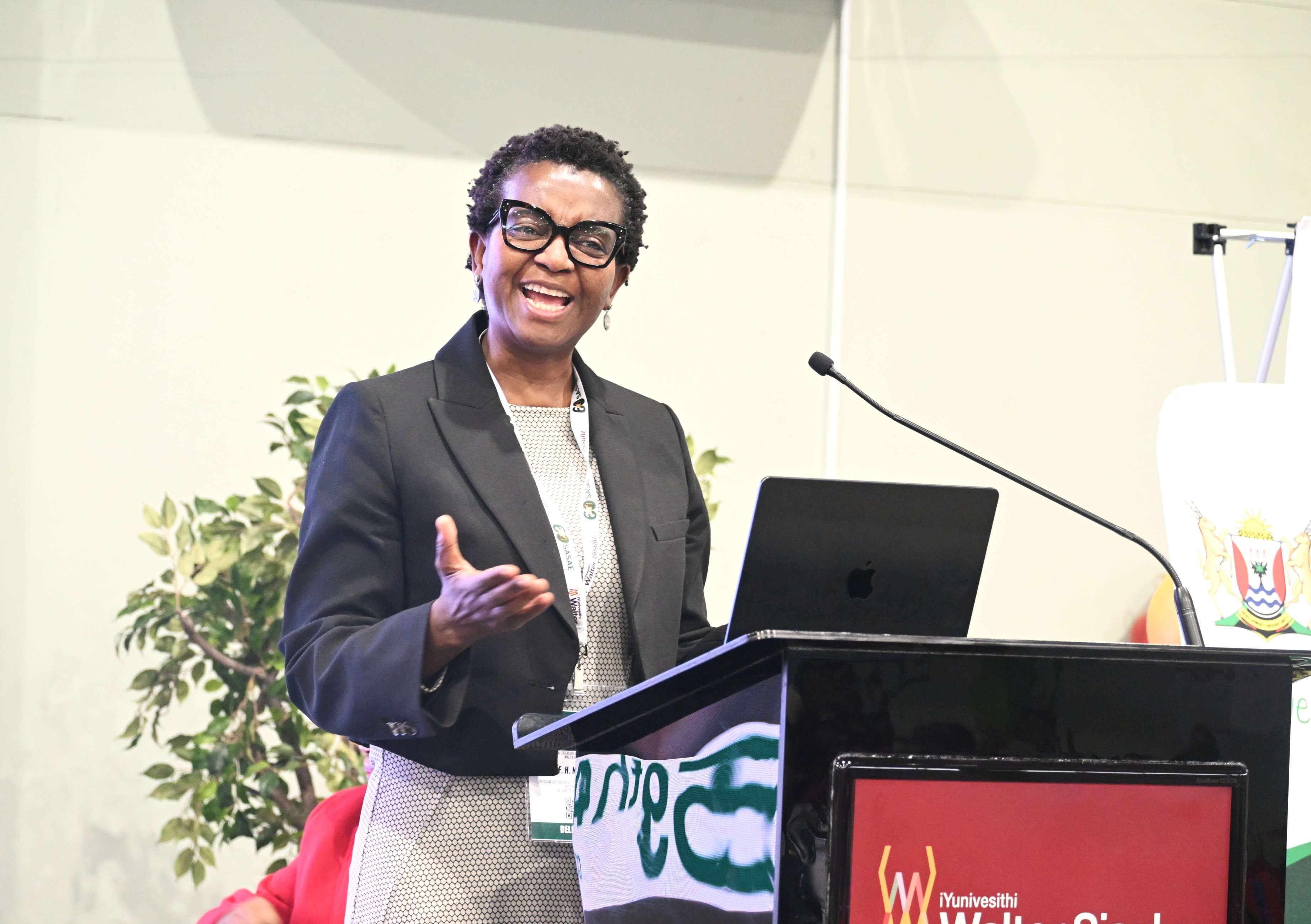
Agricultural extension professionals must continually adapt their skills and knowledge to respond effectively to the rapidly changing demands of the agricultural sector.
This was the message delivered by Professor Hlamalani Ngwenya from the University of the Free State during her keynote address at the South African Society for Agricultural Extension (SASAE) Conference hosted at iYunivesithi Walter Sisulu’s Potsdam campus from 29 June to 2 July 2026..
Agricultural extension practitioners work closely with farmers and rural communities, providing technical support, sharing research-based knowledge, and helping improve agricultural productivity.
Speaking on the professionalisation of agricultural extension, Ngwenya stipulated that extension practitioners were central to addressing some of agriculture's biggest challenges, from climate change and food security, to youth unemployment and rural development.
"We underestimate the role that extension plays in the agricultural system. Without extension, we cannot achieve the agriculture that we want to see," said Ngwenya.
Ngwenya added that extension practitioners often worked at the center of complex agricultural systems, fulfilling multiple roles beyond providing technical advice to farmers.
Drawing on her involvement in developing a global agricultural extension roadmap, Ngwenya said professionalisation had become a global priority.
She further noted that South Africa had already made significant strides in recognising agricultural extension as a profession, placing the country ahead of many of its international counterparts.
Ngwenya emphasised that professionalisation extended beyond registration with a professional body. It required quality education, workplace mentoring, continuous professional development, and support from employers, universities, professional bodies, and government.
"Professionalisation is not the responsibility of one organisation. It is the responsibility of everybody," Ngwenya said.
Like any sector, agriculture is met with multiple emerging challenges, including artificial intelligence, digital extension, and increasingly specialised markets.
Ngwenya stressed that extension professionals had to stay abreast of these developments for the profession to thrive.
The scholar stressed that extension practitioners needed to document their work to ensure local knowledge informed future technologies such as artificial intelligence. She further encouraged professionals to recognise multiple sources of knowledge, including indigenous knowledge systems, rather than prioritising one form of knowledge over another.
By Yanga Ziwele