
Languages:
Staff Apps | Enterprises | Media | Support Services | Vision 2030 | Procurement | Tenders | Contact
Staff Apps | Enterprises | Media | Support Services | Vision 2030 | Procurement | Tenders | Contact
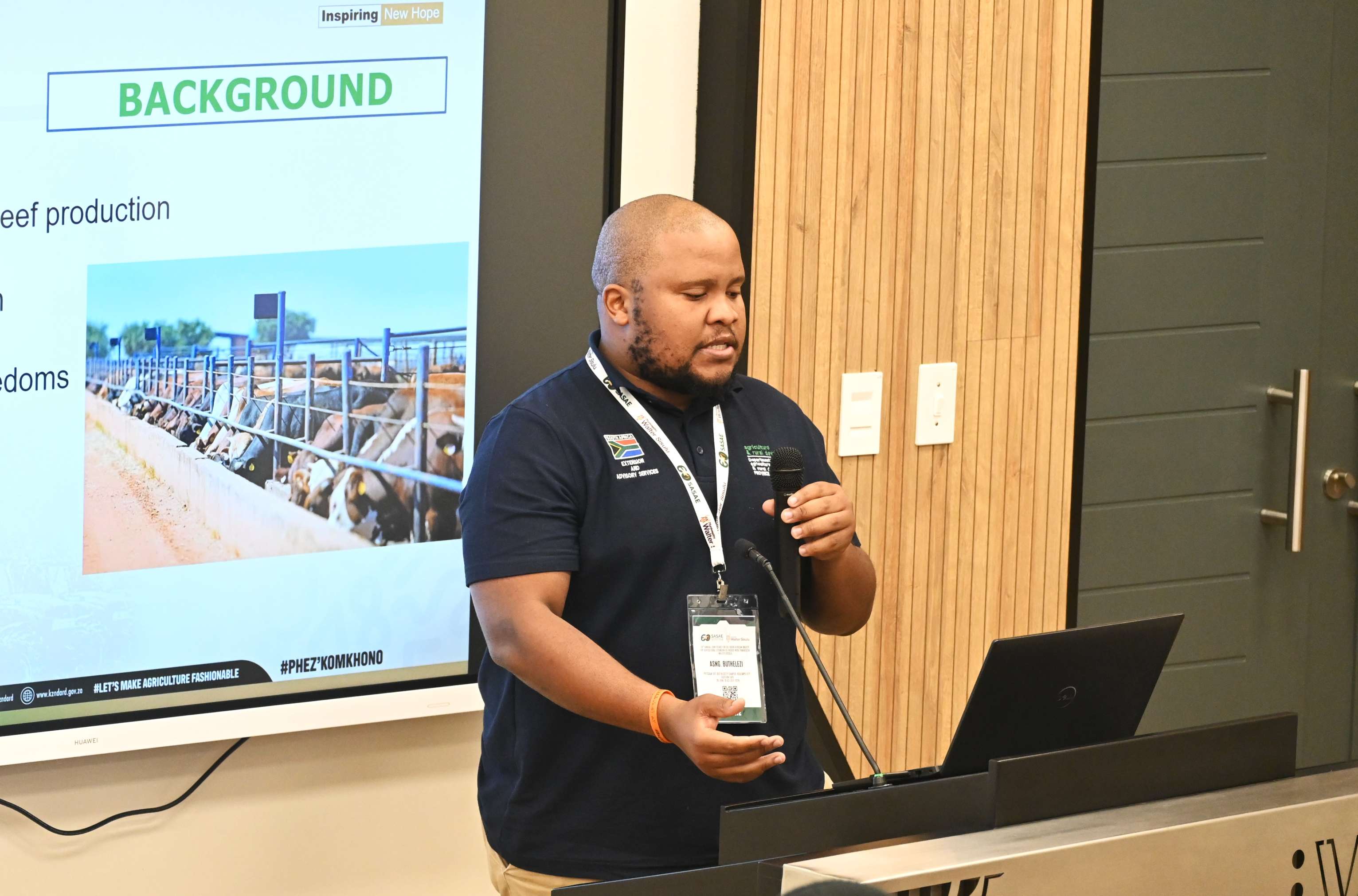
Improvements to cattle shelters could help farmers improve beef production while protecting animal rights, according to research presented at the South African Society for Agricultural Extension (SASAE) Conference held at iYunivesithi Walter Sisulu.
Agricultural advisor Abongile Buthelezi from the KwaZulu-Natal Department of Agriculture presented a study titled Evaluating the Effects of Shelter on Feedlot Performance, Health and Welfare in Beef Production Steers in Mtubatuba Local Municipality in the uMkhanyakude District.
The research examined how the provision of overhead shelter in feedlots affected the welfare of cattle and beef farmers’ productivity.
The study was prompted by a growing number of farmers shifting towards beef production, often without fully understanding the infrastructure needed to ensure healthy and productive livestock.
"My main aim for the study was to try and assist farmers to make better profits, achieve better results and at the same time align them with animal rights and animal freedoms because I noticed in these new feedlots that these animal rights are being violated in a way," said Buthelezi.
He explained that many feedlots lacked overhead shelter, leaving cattle exposed to harsh weather conditions and vulnerable to disease.
"You can imagine if you stay in one spot for about four months. When it rains, you are there. When it's hot, you are there and you can't go anywhere to hide from what is happening. One of those freedoms is freedom from discomfort. If they are exposed to the elements like that, it's easier to catch diseases," he said.
Rather than attributing the problem to negligence, Buthelezi asserted that the issue was largely caused by a lack of information.
"I think it's mostly a lack of information. The farmers I've worked with have been open to making these changes. They were willing to understand because they want to improve," he said.
The study highlighted the important role of agricultural extension practitioners in transferring practical research to farming communities.
Through extension support, farmers were able to adopt management practices that improved productivity while promoting responsible livestock production.
Buthelezi recommended that farmers incorporate overhead shelters into feedlot design, while also calling on policymakers to strengthen industry standards.
"I think the only thing farmers can do themselves is erect the shelter I'm suggesting. But from our side as a department, we also need to include these requirements in our specifications and policies. Then we won't only be preaching, we'll be preaching and doing at the same time," he said.
He concluded that improving feedlot infrastructure could enhance animal welfare, reduce disease risk and ultimately improve the quality of beef production.
By Yanga Ziwele