
Languages:
Staff Apps | Enterprises | Media | Support Services | Vision 2030 | Procurement | Tenders | Contact
Staff Apps | Enterprises | Media | Support Services | Vision 2030 | Procurement | Tenders | Contact
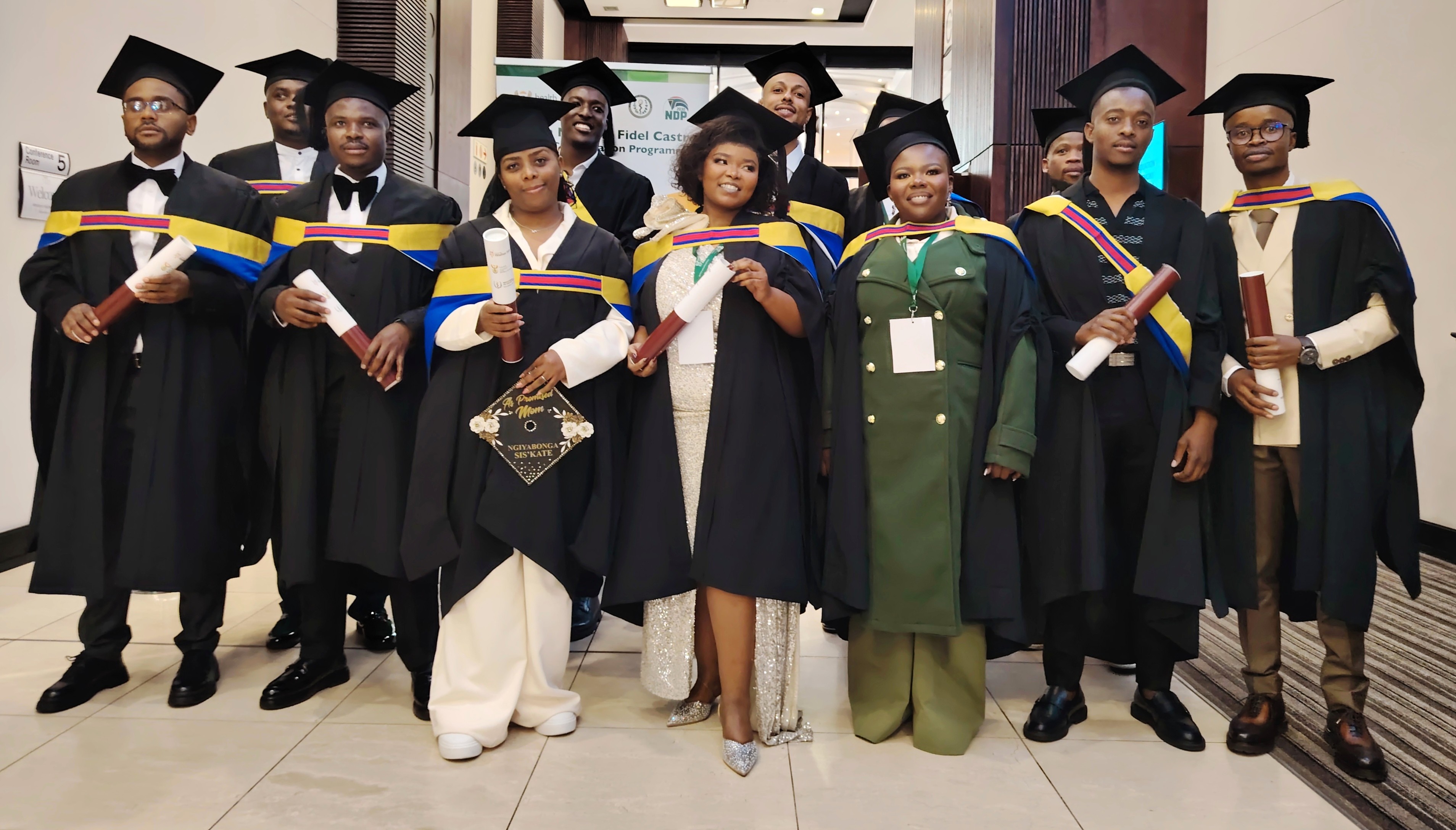
Piercing ululations, thunderous applause and tearful embraces transformed the KuGompo City (East London) International Convention Centre (ICC) into a celebration of perseverance as Walter Sisulu conferred MBChB degrees upon graduates of the Nelson Mandela–Fidel Castro Medical Collaboration Programme.
For the 19 graduates who undertook years pursuing their medical studies in Cuban , the ceremony transcended far more than the completion of a degree. It stood as the culmination of years of sacrifice, separation from loved ones, steadfast resilience, and an unwavering devotion to the medical profession.
Now celebrating three decades since its establishment in 1996, with its inaugural cohort of 10 students departing for Cuba in 1997, the Nelson Mandela–Fidel Castro Medical Collaboration Programme has become one of South Africa's most significant medical education initiatives.
To date, it has produced approximately 3 884 doctors who continue to strengthen healthcare systems and expand access to medical services across the country.
Among the ceremony's most moving moments was an address by newly qualified physician Dr Worship Mona, whose heartfelt reflections captured the emotion shared by graduates and their families alike.
Holding back tears, Mona reminded the audience that the occasion represented not only academic success but the triumph of hope over hardship.
"Today is more than a graduation ceremony. It is proof that dreams can survive hardship, that determination can outlast disappointment, and that no system, no obstacle, and no setback can permanently silence a person who refuses to give up," he said.
Mona dedicated the achievement to the parents, grandparents, and guardians whose sacrifices have made the graduates' journeys possible.
"Many of us come from families that have little, but gave us everything. Our parents, grandparents, and guardians sacrificed in ways that often went unnoticed. They worked long hours, went without, and carried burdens so that we could have opportunities they never had. Today, this achievement belongs to them as much as it belongs to us,” he continued.
While celebrating the milestone, Mona reminded his fellow graduates that the qualification they had earned carried a profound responsibility to serve society.
"We must become professionals who open doors instead of closing them," he said, urging the new doctors to create opportunities for those who will follow in their footsteps.
Providing context on the programme's enduring significance, Director in the National Department of Health, Sindile Sodladla, described the collaboration as a strategic investment in producing doctors equipped to contribute meaningfully from their first day in practice.
He explained that the programme develops "Day One Ready" interns by combining rigorous clinical training with strong professional values, practical competence, effective communication skills, and a deep commitment to community-centred healthcare.
"The reason we chose Cuba, primarily, was because they have been rated amongst countries in the world with the best healthcare systems due to the successful implementation of the Primary Health Care model. Furthermore, the Cuban healthcare system and training place greater emphasis on family and community preventive medicine, where a doctor, as a neighbour, manages limited household resources," said Sodladla.
Walter Sisulu Deputy Vice-Chancellor for Research and Internationalisation, Prof Nosisi Feza, described the graduation as both a celebration of academic excellence and a reaffirmation of the graduates' commitment to serving humanity.
"Today, as you celebrate your achievements, it is important to recognise that these accomplishments represent far more than the completion of a qualification. They embody years of dedication and a shared commitment to improving the lives of others through healthcare," said Feza.
She further encouraged the graduates to draw strength from the unique perspective afforded by their international medical education, noting that they were entering the profession with a rare blend of Cuban and South African healthcare philosophies.
"As you begin this journey, keep in mind that your experiences are not merely individual, but represent a fusion of Cuban and South African perspectives that can enrich your professional practice, inspire innovation, and help you develop solutions to the complex health challenges facing our communities,” said Feza.
By Thando Cezula