
Languages:
Staff Apps | Enterprises | Media | Support Services | Vision 2030 | Procurement | Tenders | Contact
Staff Apps | Enterprises | Media | Support Services | Vision 2030 | Procurement | Tenders | Contact
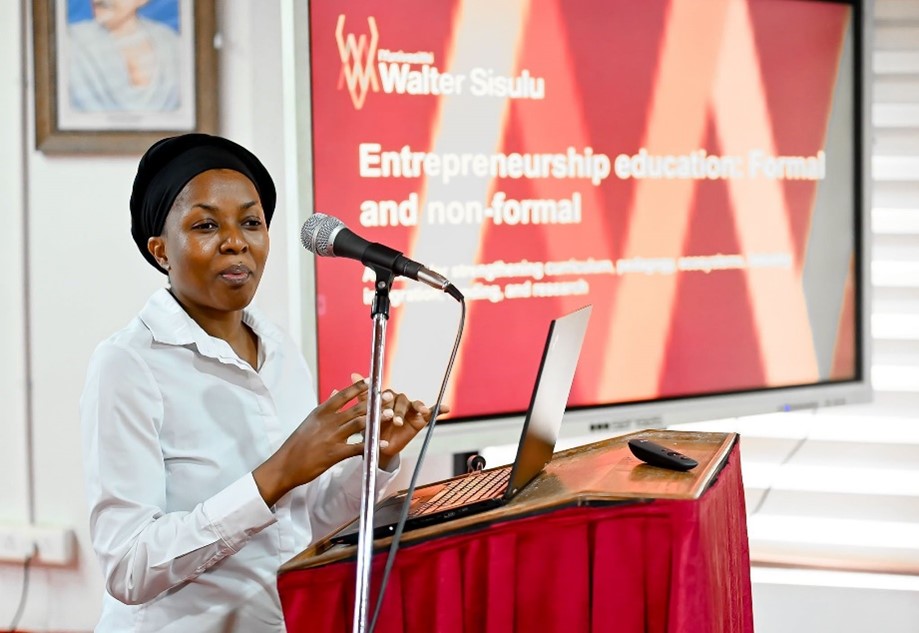 KOTTAYM, INDIA- South African universities can no longer measure success solely by the number of graduates they produce if those graduates leave campus to compete for jobs that do not exist, according to iYunivesithi Walter Sisulu associate professor, Sandra Makwembere.
That was the central message from Professor Makwembere during an international benchmarking engagement at Mahatma Gandhi University (MGU) in India, where she argued that higher education must shift from producing job seekers to cultivating entrepreneurs capable of creating new industries, employment opportunities and local economic growth.
Addressing academics and university leaders from South Africa and India, Makwembere said universities across the Global South face a common challenge: aligning higher education with economies that require innovation as much as they require skilled graduates.
"The objective is no longer just to produce graduates who can navigate existing markets, but to cultivate generators who create entirely new ones. This shift represents a broader movement within the Global South to localise innovation, reclaim the research agenda and ensure our universities become catalysts for economic transformation," she said.
Rather than treating entrepreneurship as the responsibility of business schools alone, Professor Makwembere outlined how Walter Sisulu is embedding entrepreneurial thinking across academic disciplines, including the Natural Sciences, to ensure research and innovation generate practical value beyond the classroom.
The university's Entrepreneurship Venture Building programme combines mentorship, incubation, industry partnerships and venture development to support students in transforming research into commercially viable and socially responsive enterprises.
She highlighted the success of Bameaze, an agricultural enterprise established by the winner of the 2023 Entrepreneurship Development in Higher Education (EDHE) national competition. After securing R120,000 in seed funding, the entrepreneur returned to his rural community, where the business has expanded to create employment, strengthen local food security and provide agricultural training to young people.
She also pointed to award-winning innovations in prosthetic technology developed by Walter Sisulu students, demonstrating how entrepreneurial education is extending beyond agriculture into healthcare and advanced technology.
According to Professor Makwembere, these examples demonstrate that entrepreneurship should not be viewed simply as business creation but as a mechanism for addressing pressing social and economic challenges.
Her presentation formed part of a week-long benchmarking programme between iYunivesithi Walter Sisulu and Mahatma Gandhi University aimed at strengthening collaboration in research, postgraduate education and entrepreneurship while exploring solutions to shared development challenges.